

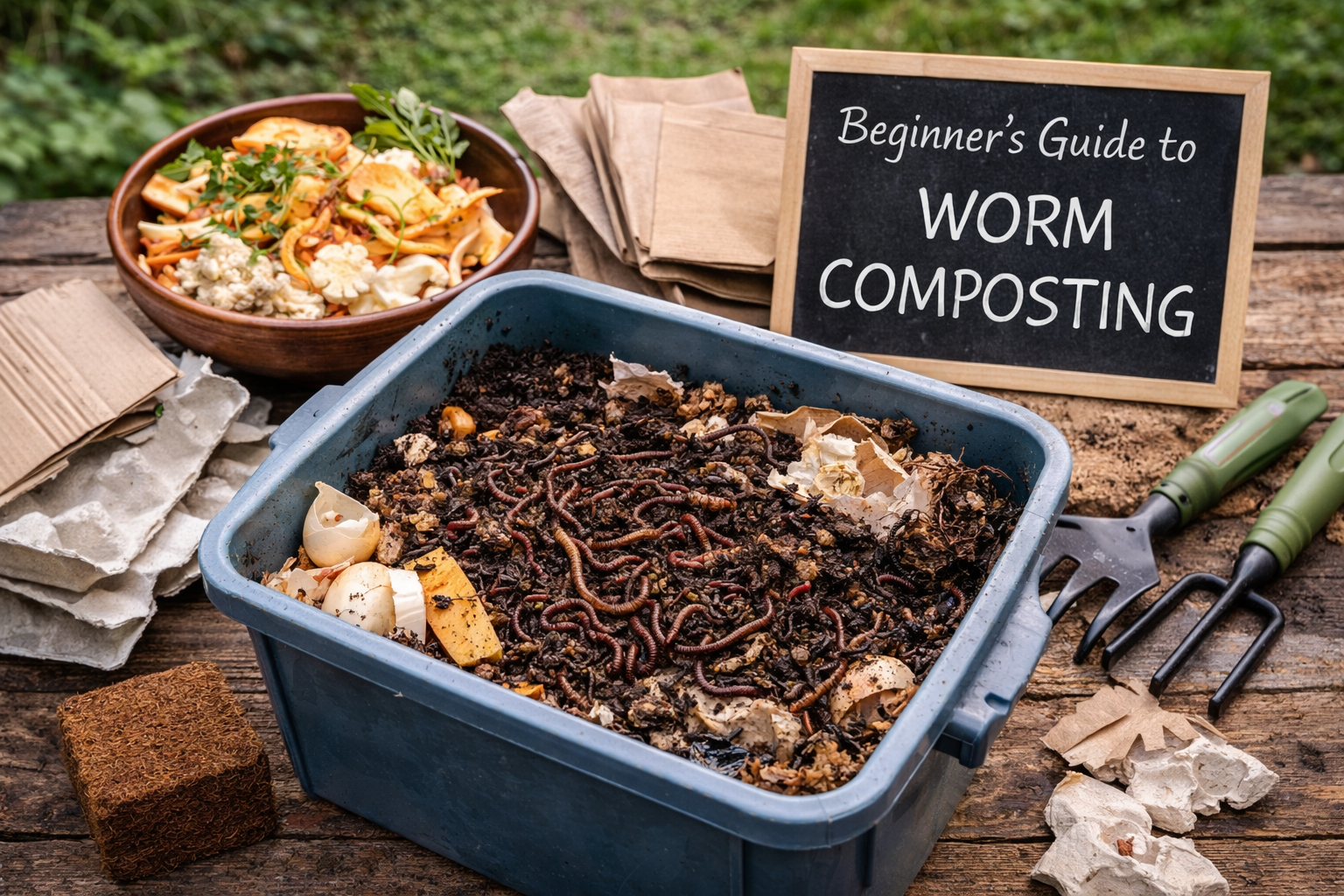
Beginner’s Guide to Worm Composting: Everything You Need to Get Started
Worm composting, also known as vermicomposting, is one of the simplest and most effective ways to turn kitchen waste into rich, living compost. It’s ideal for UK homes, gardens, allotments and even small outdoor spaces, and once set up, it largely looks after itself.
This beginner’s guide explains how worm composting works, what you need to start, how much to feed your worms, and what to do with the finished compost once it’s ready.
What Is Worm Composting?
Worm composting uses specific composting worms to break down food scraps into a dark, crumbly material known as worm castings. These castings are packed with beneficial microbes and nutrients and are excellent for soil health.
Unlike traditional compost heaps, worm bins work efficiently on a small scale and don’t rely on heat. This makes them perfect for households that want to reduce food waste without needing a large garden.
Benefits of Worm Composting
- Reduces household food waste
- Produces high-quality natural fertiliser
- Improves soil structure and plant health
- Low smell when managed properly
- Suitable for year-round use in the UK
The Best Worms for Composting
Not all worms are suitable for composting. Garden earthworms are not ideal. Instead, you need surface-dwelling compost worms that thrive in organic waste.
Recommended Species
- Tiger worms (Eisenia fetida)
- Red worms (Eisenia andrei)
These worms reproduce quickly, tolerate close living conditions, and are highly efficient at processing food scraps.
What You Need to Start a Worm Compost Bin
1. A Worm Bin
This can be a purpose-made wormery or a well-ventilated plastic storage box. It should have:
- Drainage holes
- Air holes
- A secure lid
2. Bedding Material
Bedding keeps worms comfortable and helps regulate moisture. Suitable bedding includes:
- Shredded cardboard or newspaper
- Coconut coir
- Egg cartons
Dampen bedding so it feels like a wrung-out sponge.
3. Food Waste
Worms eat soft, biodegradable kitchen scraps. Start slowly while your bin establishes itself.
What Can (and Can’t) Go in a Worm Bin
Foods Worms Love
- Vegetable peelings
- Fruit scraps
- Tea bags (plastic-free)
- Crushed eggshells
Foods to Avoid
- Meat and fish
- Dairy products
- Oily or spicy foods
- Large amounts of citrus
- Salty or processed foods
Overfeeding is the most common beginner mistake. If food is building up rather than disappearing, reduce quantities.
If you want a more precise breakdown of quantities and feeding frequency, see our detailed guide on how much you should feed your worms, which explains feeding rates based on worm numbers and bin size.
How to Maintain a Healthy Worm Bin
Feeding Schedule
Feed little and often. Bury food beneath bedding and rotate feeding spots to encourage even processing.
Moisture Levels
The bin should remain moist but not wet. Strong smells usually indicate excess moisture or uneaten food.
Temperature
Worms thrive between 10–25°C. In the UK, protect bins from frost in winter and overheating during summer.
Harvesting Worm Castings
After a few months, you’ll notice dark, soil-like compost forming in the bin. This is your finished worm compost.
There are several ways to separate worms from their castings, depending on scale and equipment. Small setups often use light exposure or hand sorting, while larger systems benefit from simple screens or mechanical sifters.
We cover this in depth in our practical guide to ways to sift worms from castings, from hand tools to machines, including low-cost and DIY options.
Using Worm Compost in the Garden
Worm castings are highly concentrated, so use them sparingly:
- Mix small amounts into potting compost
- Sprinkle around the base of plants
- Brew into a gentle compost tea
They improve soil structure, water retention and nutrient availability without the risk of burning plants.
Common Worm Composting Problems (and Fixes)
Bad Smells
Usually caused by overfeeding or excess moisture. Remove uneaten food and add dry bedding.
Worms Trying to Escape
This can happen in new bins. Reduce feeding, check moisture, and ensure good airflow.
Fruit Flies
Bury food deeper and avoid leaving scraps exposed.
Is Worm Composting Worth It?
For many households, absolutely. Worm composting reduces waste, produces valuable compost, and deepens your understanding of natural cycles. It’s low-cost, educational, and rewarding once established.
If you already enjoy growing food, gardening or seasonal foraging, worm composting is a natural next step.
Final Thoughts
Worm composting is one of the easiest composting methods to start in the UK, even with limited space. Begin small, feed carefully, and let the worms do the work. Over time, you’ll produce rich compost while cutting down on household waste — a genuine win for both garden and environment.
FAQ: Worm Composting in the UK
Can worm composting be done indoors?
Yes, provided the bin is well managed, ventilated and not overfed.
Do worm bins smell?
No — a healthy worm bin should smell earthy, not unpleasant.
How long does worm composting take?
You can expect usable compost within 2–4 months, depending on conditions and feeding rate.
