

Seasonal Foraging & Wild Food in the UK: Simple Edibles to Find Near You (With a Blackberry Port Twist!)
Foraging in the UK is one of those simple, joyful pursuits — a stroll in the countryside that might just yield something delicious. Done properly, it’s safe, sustainable and a brilliant way to reconnect with the seasons. From tender spring greens to autumn’s bounty of berries and nuts, there’s always something to seek out. And if you’re collecting blackberries, why not turn some into a homemade treat? We’ve even got a recipe project for Home Made Blackberry Port you can try once you have plenty of fruit.
Before You Start: Safety, Law & Common Sense
Foraging should always be approached with respect for nature, the law and your own safety. Never eat anything unless you can positively identify it, avoid polluted areas like roadsides and sprayed fields, and always leave plenty behind for wildlife and future seasons. Ask landowners for permission where required, and consider taking a local course to sharpen your plant ID skills.
Spring Foraging in the UK: Fresh Greens & Gentle Flavours
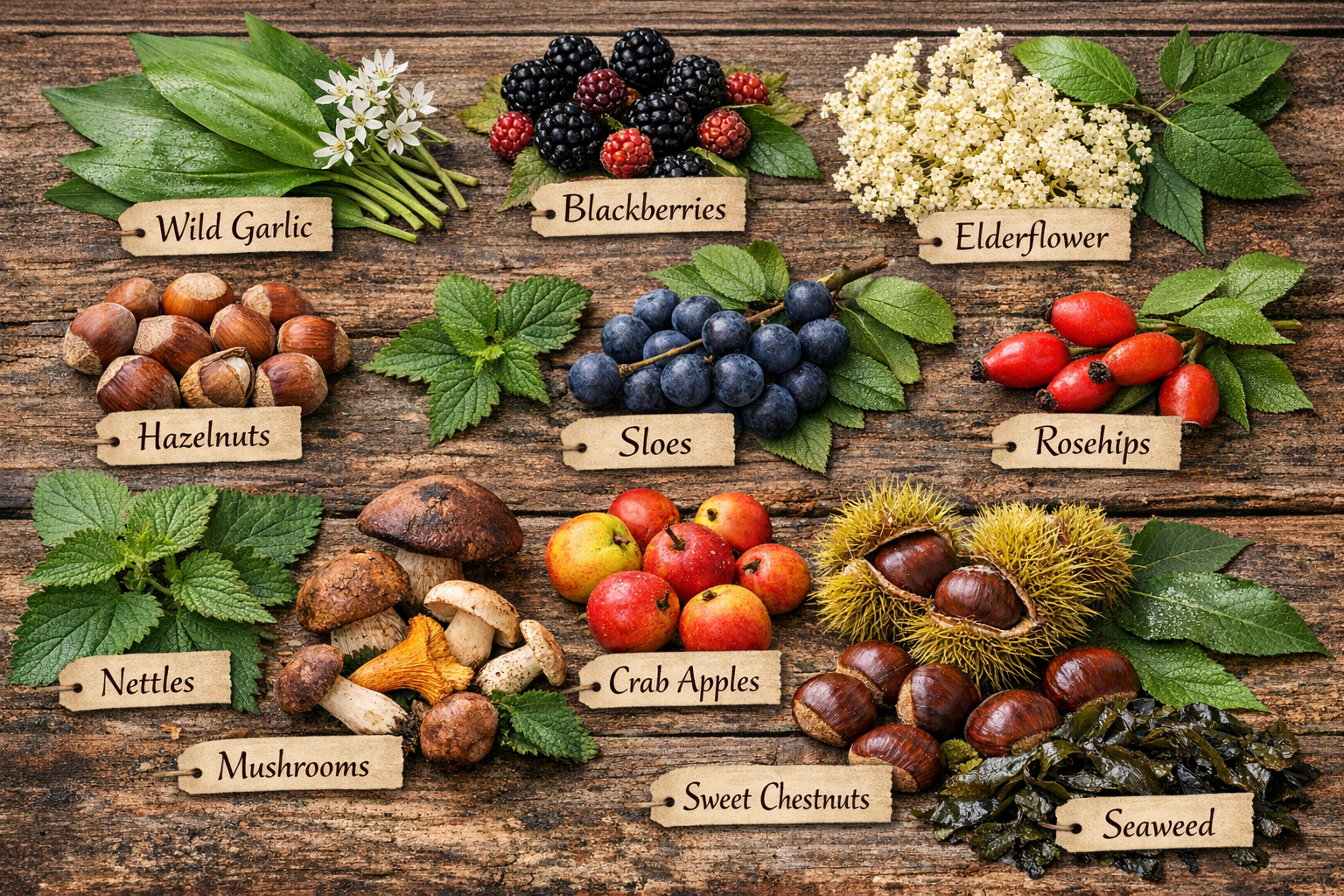
Wild Garlic (Ramsons)
Where: Damp woods and shaded banks.
How to use: Blitz into pesto or stir into pasta and risottos.
Nettles (Young Tops)
Where: Hedgerows, woodland edges, gardens.
How to use: Perfect in warming soups or teas once blanched to remove sting.
Dandelion Leaves
Where: Lawns and grassy fields.
How to use: Add young leaves to salads or gently wilt them like spinach.
Summer Foraging in the UK: Berries, Blossoms & Picnic Finds
Elderflower
Where: Hedgerows and woodland edges.
How to use: Make cordial or light sherbet syrups — a quintessential summer foraged flavour.
Blackberries
Where: Brambles along field edges, paths and hedgerows.
How to use: Eat fresh, turn into jam or pies — or save lots of them to experiment with drinks like Blackberry Port. Foraging ripe blackberries in summer and early autumn gives you the sweetest fruit as they fully ripen on the bush.:contentReference[oaicite:0]{index=0}
Wild Strawberries & Raspberries
Where: Sunny clearings and woodland edges.
How to use: Delicious fresh or folded into creamy desserts.
Autumn Foraging in the UK: Nuts, Fruits & Hearty Flavours
Hazelnuts & Sweet Chestnuts
Where: Woodland and hedgerows.
How to use: Roast for snacking, add to baking or crumble over salads.
Crab Apples & Damsons
Where: Old hedgerows and orchards.
How to use: Jelly, chutney or festive preserves.
Mushrooms (With Caution!)
Where: Woodlands and grassland.
How to use: Only pick mushrooms if you have solid ID skills — poisonous lookalikes abound.
Winter Foraging in the UK: Quiet but Rewarding
Sloes & Rosehips
Where: Blackthorn and wild rose hedges.
How to use: Sloes shine in gin infusions; rosehips make rich syrups and teas.
Pine Needles (Tea)
Where: Certain pine species (not yew!).
How to use: A citrusy tea — perfect by the fire.
Coastal Seaweed
Where: UK shorelines at low tide.
How to use: Dry for seasoning or add to soups — always avoid polluted waters.
Make the Most of Your Foraged Finds
- Cordials & Syrups: Elderflower, rosehip or hawthorn.
- Jams & Chutneys: Blackberry, crab apple, damson.
- Teas: Nettle, pine needle, rosehip.
- Wild Drinks: Turn excess summer blackberries into a rich homemade brew with our Blackberry Port project.
Quick Foraging Checklist
- Start with easy, distinctive plants like blackberries and nettles.
- Use a field guide and learn one plant at a time.
- Avoid polluted roadsides and sprayed fields.
- If in doubt: don’t pick or eat it!
Final Thoughts
Foraging in Britain is a year-round adventure. Spring offers fresh greens, summer is rich with berries and blossoms, autumn brings nuts and fruits, and even winter has its treasures if you know where to look. Keep it safe, sustainable and respectful — and maybe you’ll be toasting a beautiful homemade blackberry port after your next foraging expedition!
