

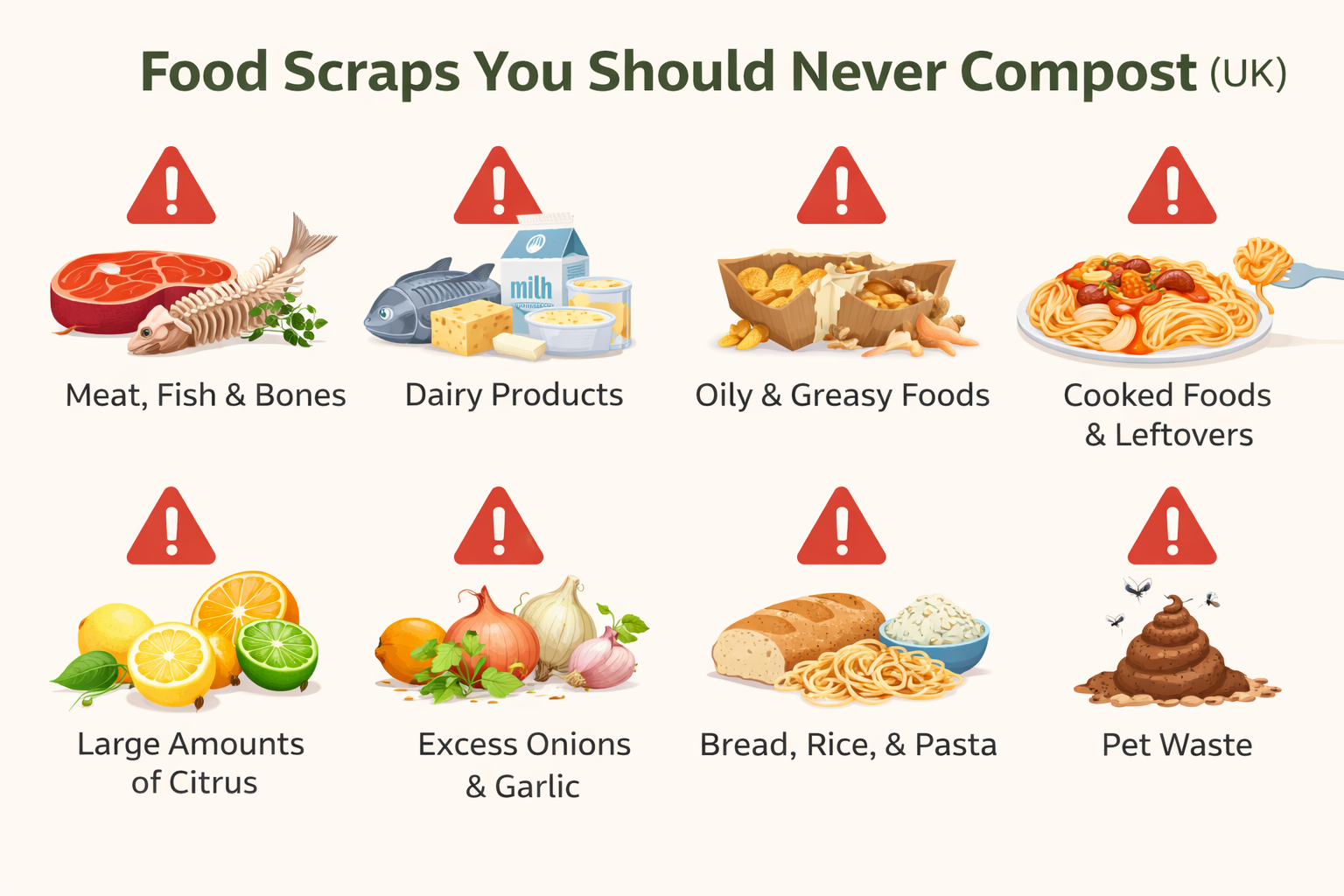
What Food Scraps Should Never Go in Compost (UK Guide)
Composting is one of the easiest ways to reduce household waste, but many people don’t realise what food scraps should not be composted. Adding the wrong items can attract pests, cause bad smells and slow decomposition..
This guide explains what food scraps you should never compost, why they cause problems, and what safer alternatives you can use instead.
Why Some Food Scraps Don’t Belong in Compost
Compost works best when there’s a healthy balance of materials breaking down naturally. Certain foods:
- Rot too quickly and smell
- Attract rats, flies and other pests
- Disrupt moisture balance
- Carry harmful bacteria
This applies to both traditional compost heaps and worm bins, although worm composting has its own additional restrictions.
Food Scraps You Should Never Compost
Meat, Fish & Bones
These are a big no. They rot quickly, smell strongly and attract rats, foxes and flies. They also take a long time to break down and can introduce harmful bacteria into your compost.
Dairy Products
Cheese, milk, yoghurt and butter create strong odours and attract pests. They also coat compost materials, reducing airflow.
Oily & Greasy Foods
Leftover takeaway, fried food and cooking oils slow decomposition and can make compost soggy and smelly.
Cooked Foods & Leftovers
Cooked meals often contain salt, spices and oils, all of which worms and microbes dislike. These scraps also rot very quickly.
Large Amounts of Citrus
Small amounts are fine, but large quantities of orange, lemon or lime peel make compost too acidic and slow decomposition.
Onions & Garlic (in excess)
Again, small amounts are fine, but large volumes can upset the microbial balance and repel worms.
Bread, Rice & Pasta
These go mouldy quickly and attract pests. In worm bins, they can ferment and harm the worms.
Pet Waste
Dog and cat waste contains harmful pathogens and should never be composted at home.
Diseased Plants
Composting infected plants can spread disease back into your garden when the compost is used.
What About Worm Composting?
If you use a worm bin, you need to be even more careful. Worms are sensitive to:
- Spicy food
- Salty leftovers
- Large amounts of citrus
- Dairy and meat
For a detailed breakdown on feeding quantities and schedules, see our guide on how much you should feed your worms.
Food Scraps That Are Safe to Compost
Instead, focus on these compost-friendly scraps:
- Vegetable peelings
- Fruit scraps (in moderation)
- Tea bags (plastic-free)
- Coffee grounds
- Crushed eggshells
- Wilted flowers
Balance these with brown materials such as cardboard, dry leaves and newspaper.
Common Composting Mistakes
Overfeeding
Adding too much food at once causes rotting and smell. Compost should break down gradually.
Too Much Moisture
Wet compost smells bad. Add dry materials if it becomes soggy.
Not Enough Air
Turn compost regularly to allow oxygen to circulate.
How to Dispose of Problem Scraps Instead
- Use council food waste bins
- Freeze scraps until collection day
- Consider bokashi composting for cooked food
Is It Ever OK to Compost These Foods?
Hot compost systems can handle meat and dairy if done correctly, but these require careful temperature control. For most home composters, it’s best to avoid them completely.
Final Thoughts
Knowing what not to compost is just as important as knowing what to add. By avoiding problem food scraps, you’ll keep your compost healthy, pest-free and odour-free.
If you’re using a worm bin, take extra care and stick to soft plant-based scraps only. This will keep your worms happy and your compost thriving.
FAQ: Composting Food Scraps
Can I compost citrus peel?
Yes, but only in small amounts. Too much makes compost acidic.
Can cooked food go in compost?
It’s best avoided as it attracts pests and smells.
Do eggshells compost?
Yes – crush them first to speed up decomposition.
