

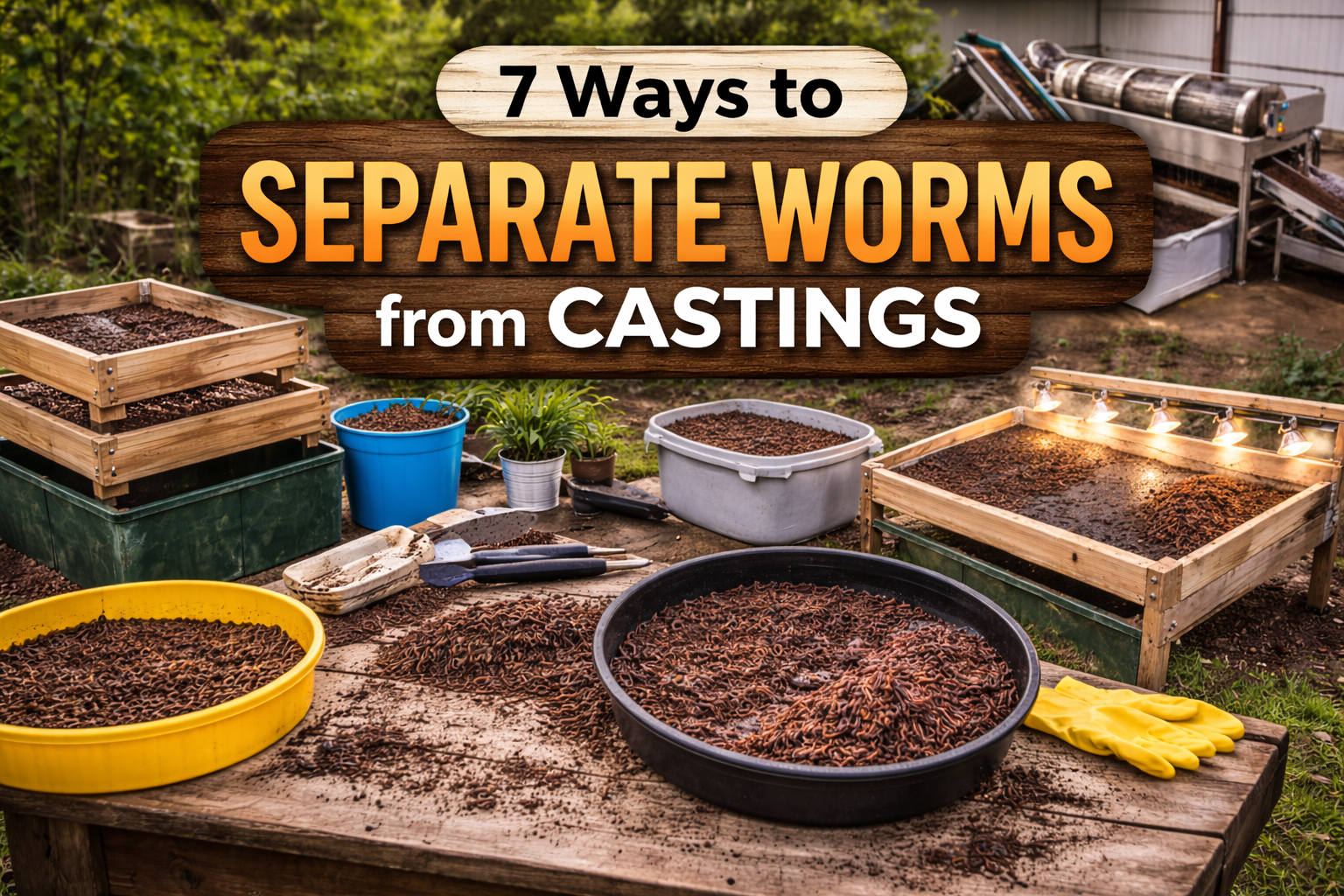
A practical guide to separating worms from worm castings, from simple hand methods to DIY systems and commercial machines.
Harvesting worm castings is one of the most satisfying parts of running a worm bin — but separating the worms from the finished compost is where many people get stuck. Do it wrong, and you’ll stress or lose worms. Do it right, and you’ll end up with clean, crumbly castings and a healthy worm population ready to keep working.
This guide covers every practical way to sift worms from castings, starting with simple hand tools, moving through DIY options, and finishing with commercial machines used by larger producers. Not every method suits every setup, so the key is choosing the approach that matches your scale.
Before You Start: When Are Castings Ready?
Before thinking about separation, make sure your castings are actually ready to harvest.
Finished worm castings should be:
- Dark brown or black
- Crumbly and soil-like
- Smell earthy, not sour
- Contain very little recognisable food
If you still see large food scraps, give the bin more time. Separating too early makes the job harder and stresses the worms.
Method 1: Hand Sorting (Best for Small Bins)
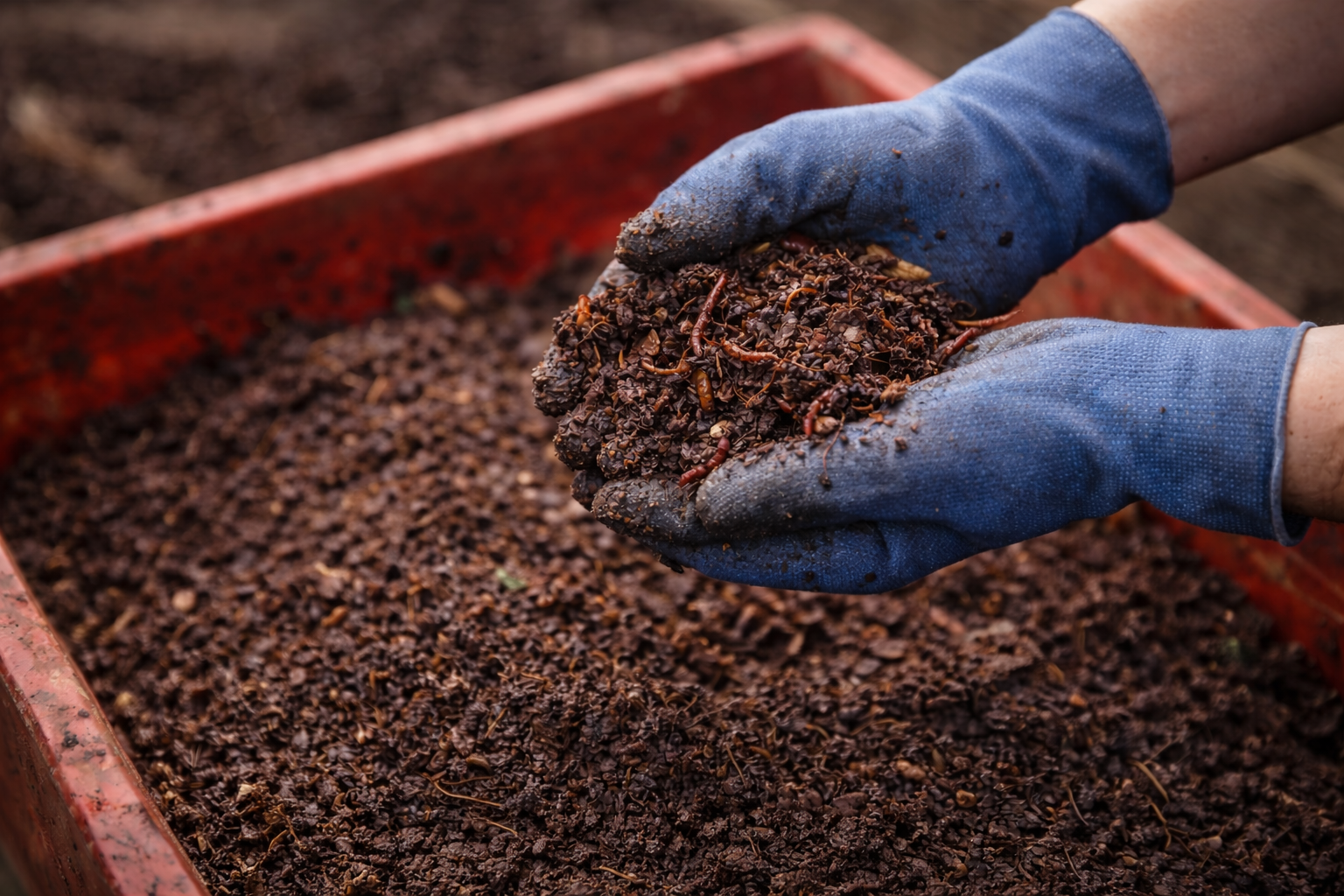
Hand sorting is the simplest and cheapest method. It works best for small worm bins and occasional harvesting.
How it works
Empty the contents of the bin onto a flat surface and gently pick out the worms by hand, returning them to fresh bedding.
What you’ll need
- A table, tray, or tarp
- Good light
- Patience
Pros
- No cost
- No equipment required
- Very gentle on worms
Cons
- Time-consuming
- Impractical for larger volumes
This method is ideal if you only harvest a small amount of castings every few months.
Method 2: Light Separation (Cone Method)
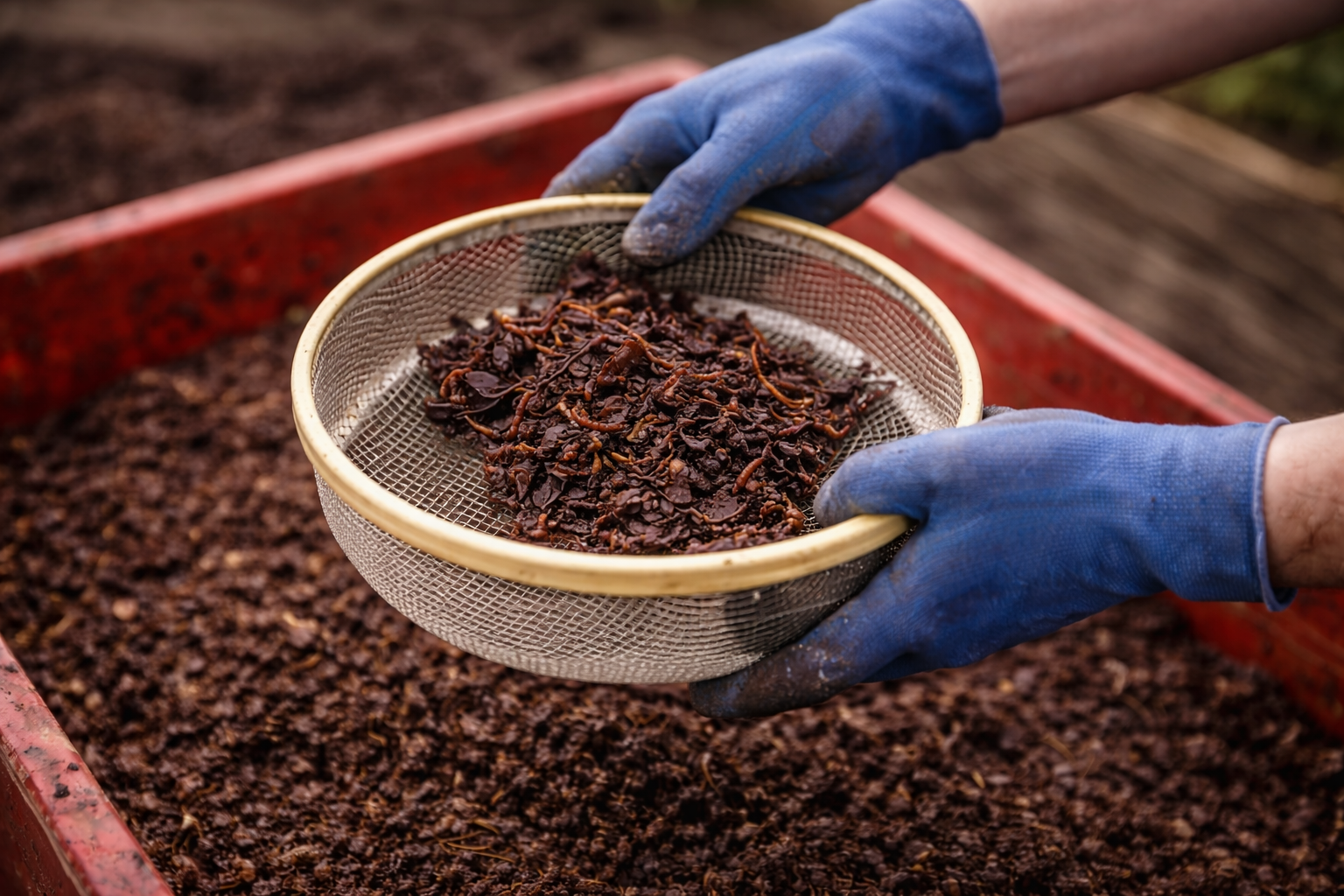
Worms naturally move away from light. This behaviour can be used to separate them without touching each one.
How it works
Form small cone-shaped piles of castings under a bright light. Worms move downwards to escape the light. You skim off the top layer repeatedly until only worms remain.
Pros
- No tools required
- Gentle and reliable
- Faster than hand sorting
Cons
- Still labour-intensive
- Requires space and time
This is one of the most popular methods for home worm farmers.
Method 3: Simple Hand Sieves
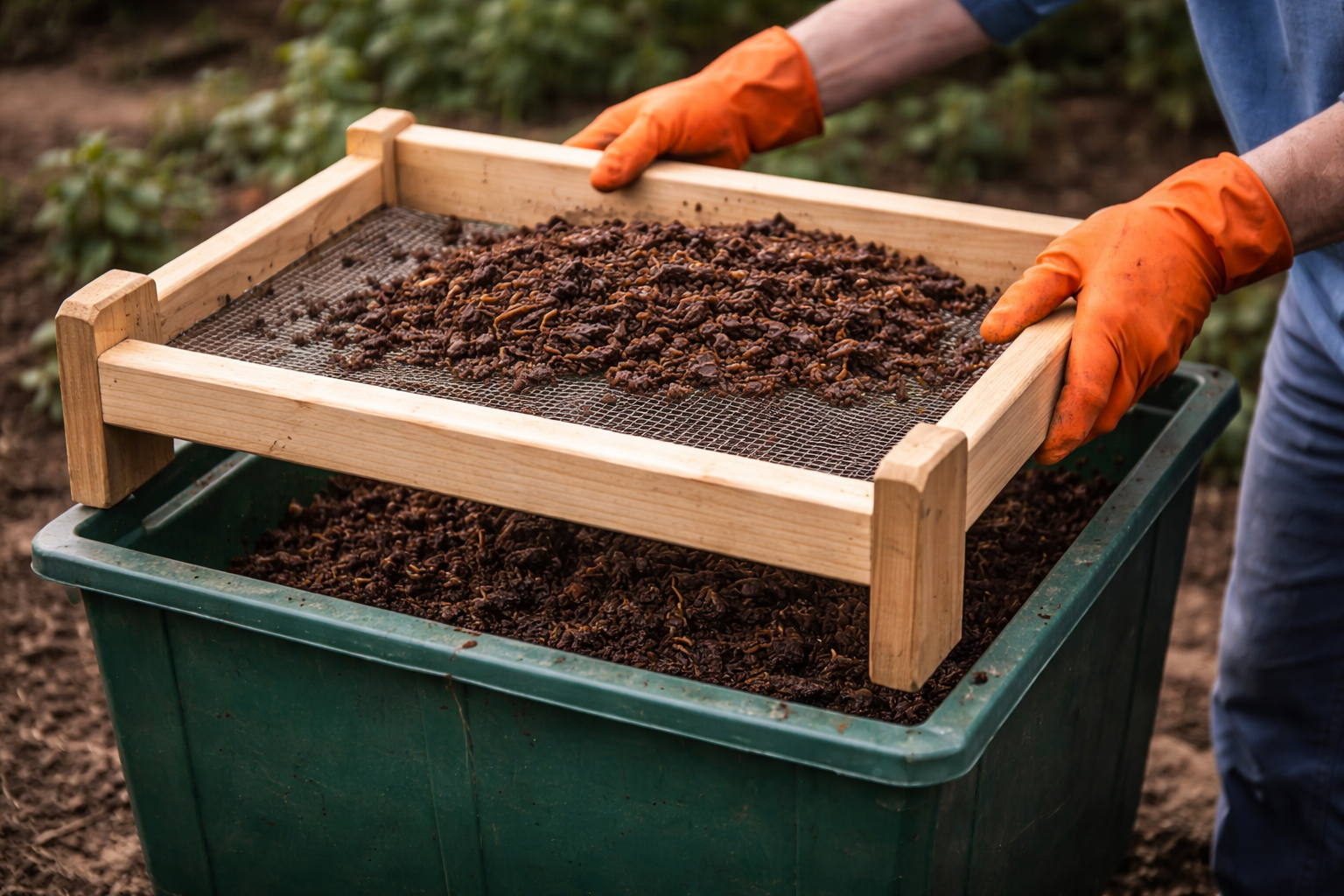
Using a basic sieve is the first step toward mechanical separation.
How it works
Castings are passed through a mesh screen. Fine material falls through while worms and larger debris remain on top.
Recommended mesh sizes
- 5–6 mm for general separation
- 8 mm if castings are still slightly wet
Pros
- Cheap and accessible
- Much faster than hand sorting
- Produces cleaner castings
Cons
- Some worms will still need manual removal
- Wet material clogs mesh easily
Letting castings dry slightly before sieving makes a huge difference.
Method 4: DIY Screen Frames
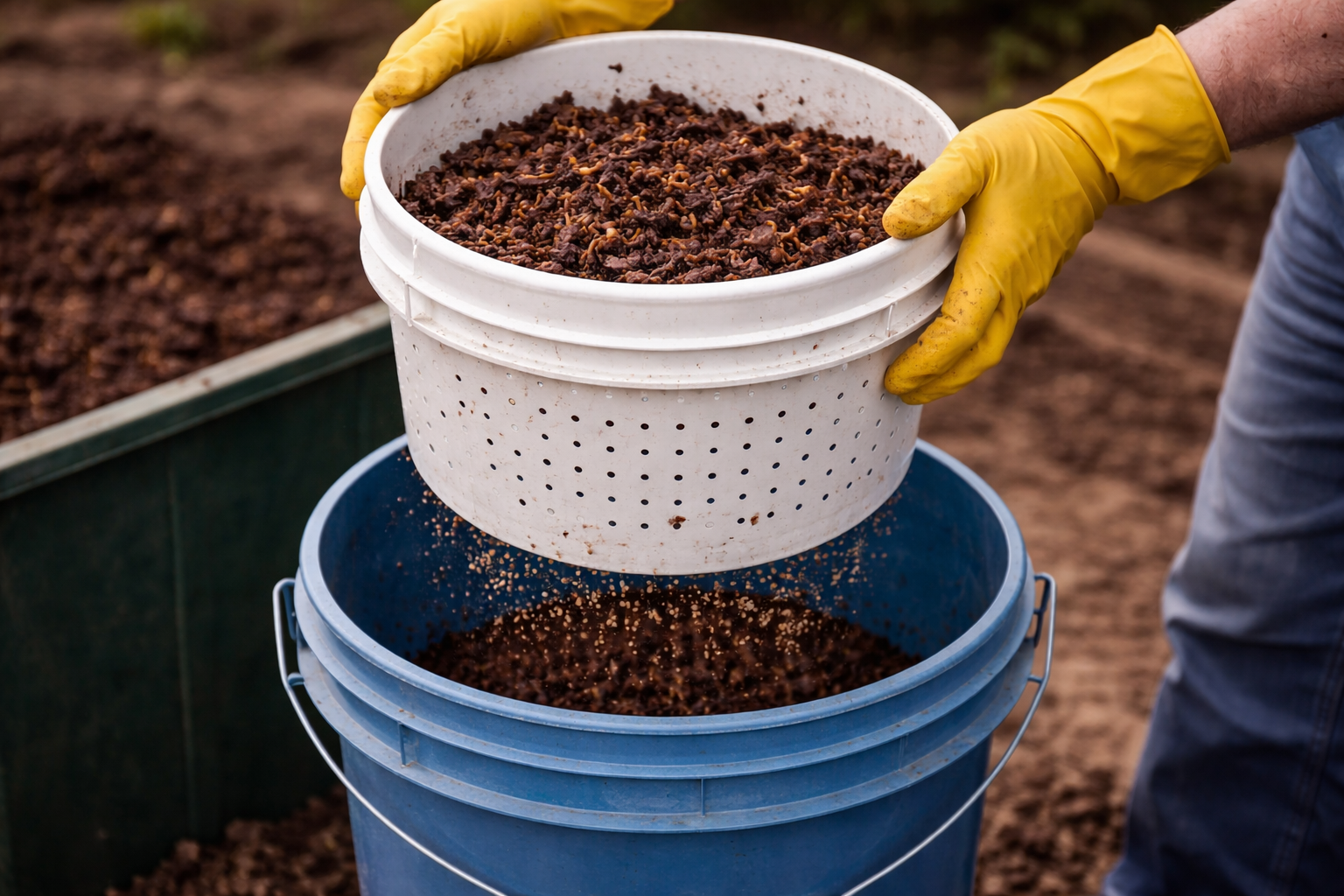
For regular harvesting, many people build simple screen frames.
How it works
A wooden or metal frame is fitted with mesh and placed over a container. Castings are rubbed through by hand.
Materials needed
- Timber or metal frame
- Galvanised mesh
- Screws or staples
Pros
- Low cost
- Scalable to your needs
- Durable
Cons
- Still manual work
- Requires storage space
This method is a strong middle ground for keen home users.
Method 5: DIY Rotary Trommel (Drum Sifter)
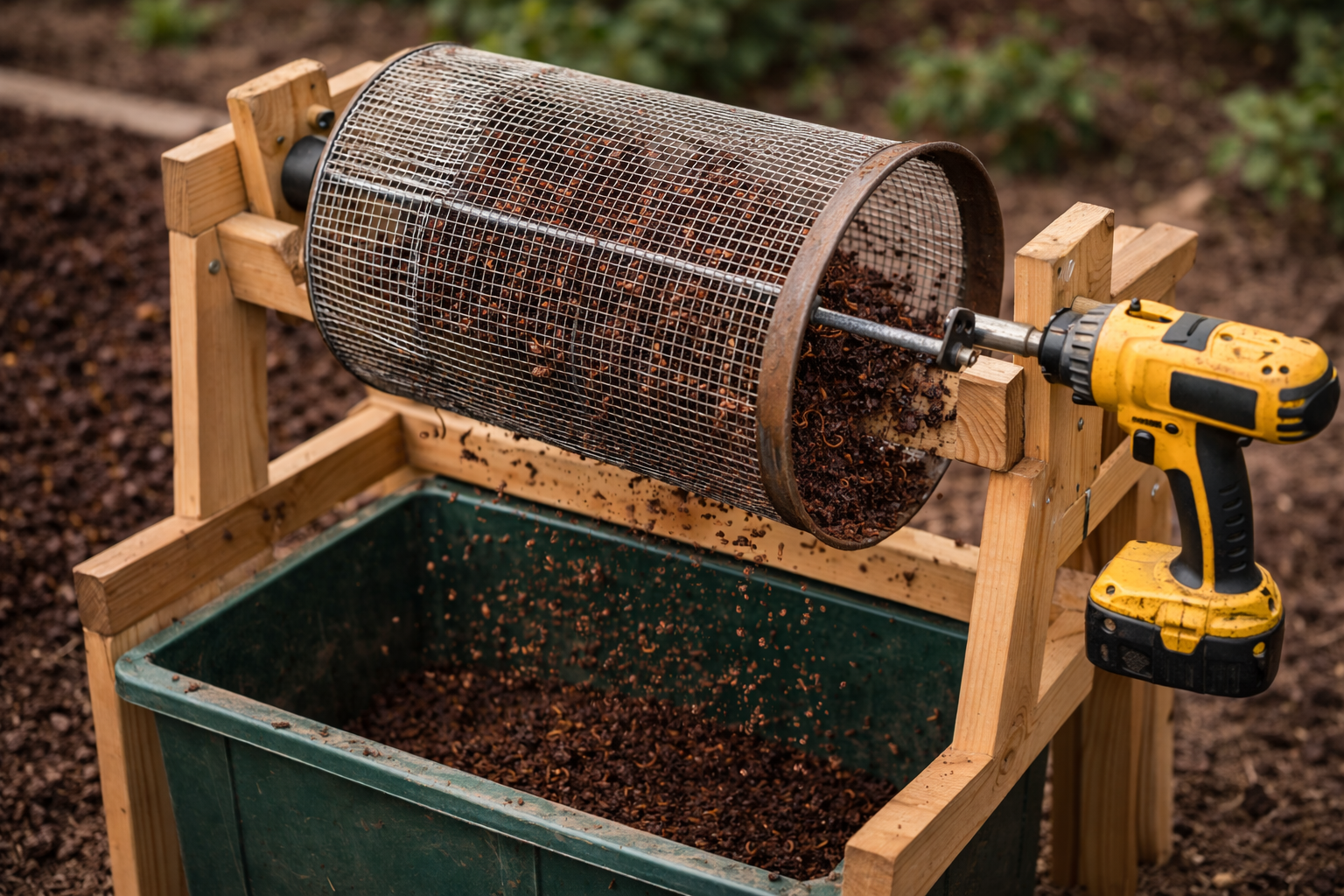
A trommel is a rotating cylindrical sieve and marks the transition from manual to mechanical separation.
How it works
Material is placed in a rotating mesh drum. Fine castings fall through while worms exit at the end.
DIY options
- Hand-cranked drums
- Drill-powered systems
- Low-speed motor builds
Pros
- Very efficient
- Minimal worm handling
- Scales well
Cons
- More complex to build
- Requires careful speed control
This is ideal for people producing castings regularly.
Method 6: Shaker Tables (DIY or Semi-Commercial)
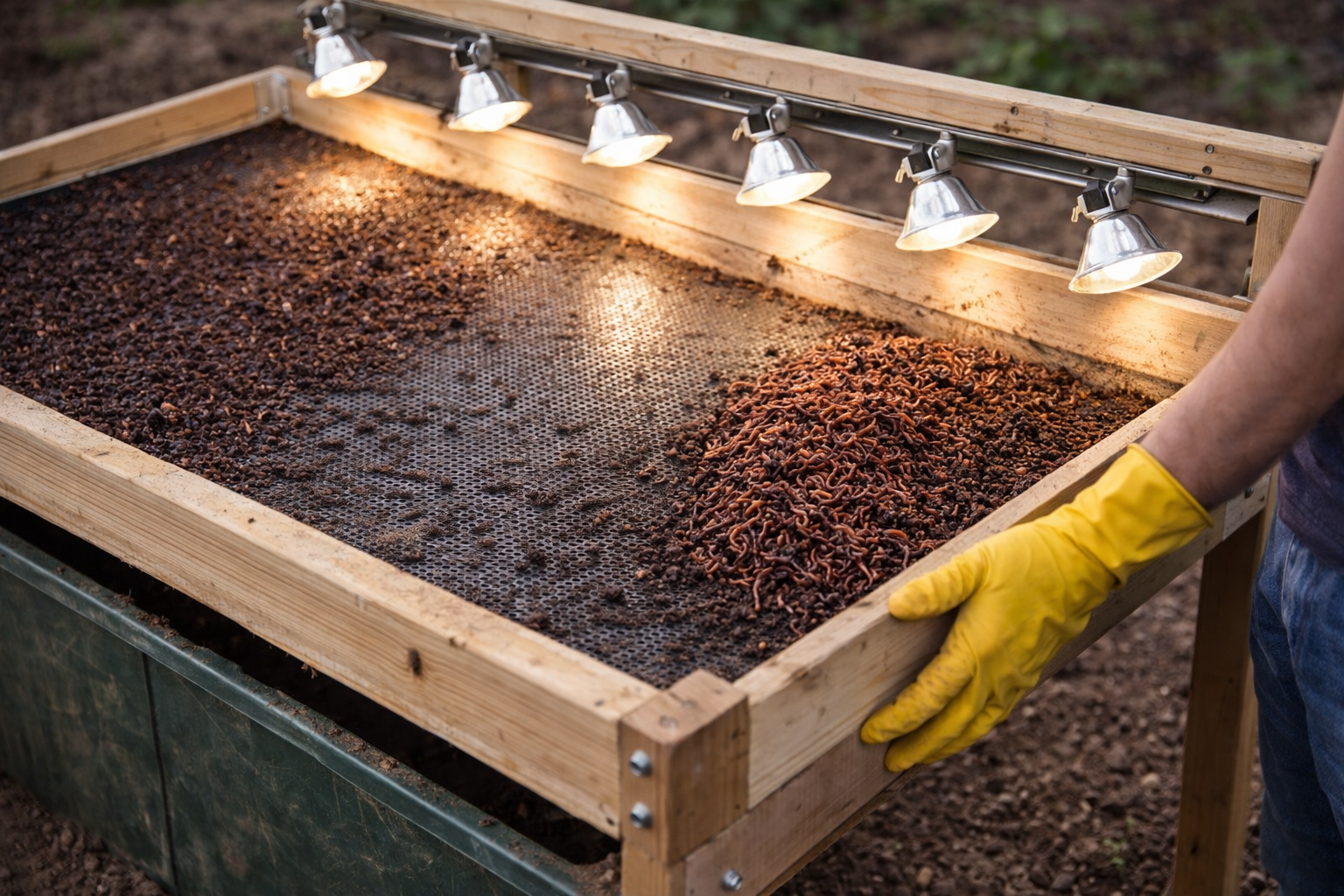
Shaker tables use vibration rather than rotation.
How it works
Material is shaken across a mesh surface. Castings fall through while worms move forward.
Pros
- Gentle on worms
- Produces very clean castings
Cons
- Complex build
- Requires tuning
Often used by serious hobbyists and small producers.
Method 7: Commercial Worm Separation Machines
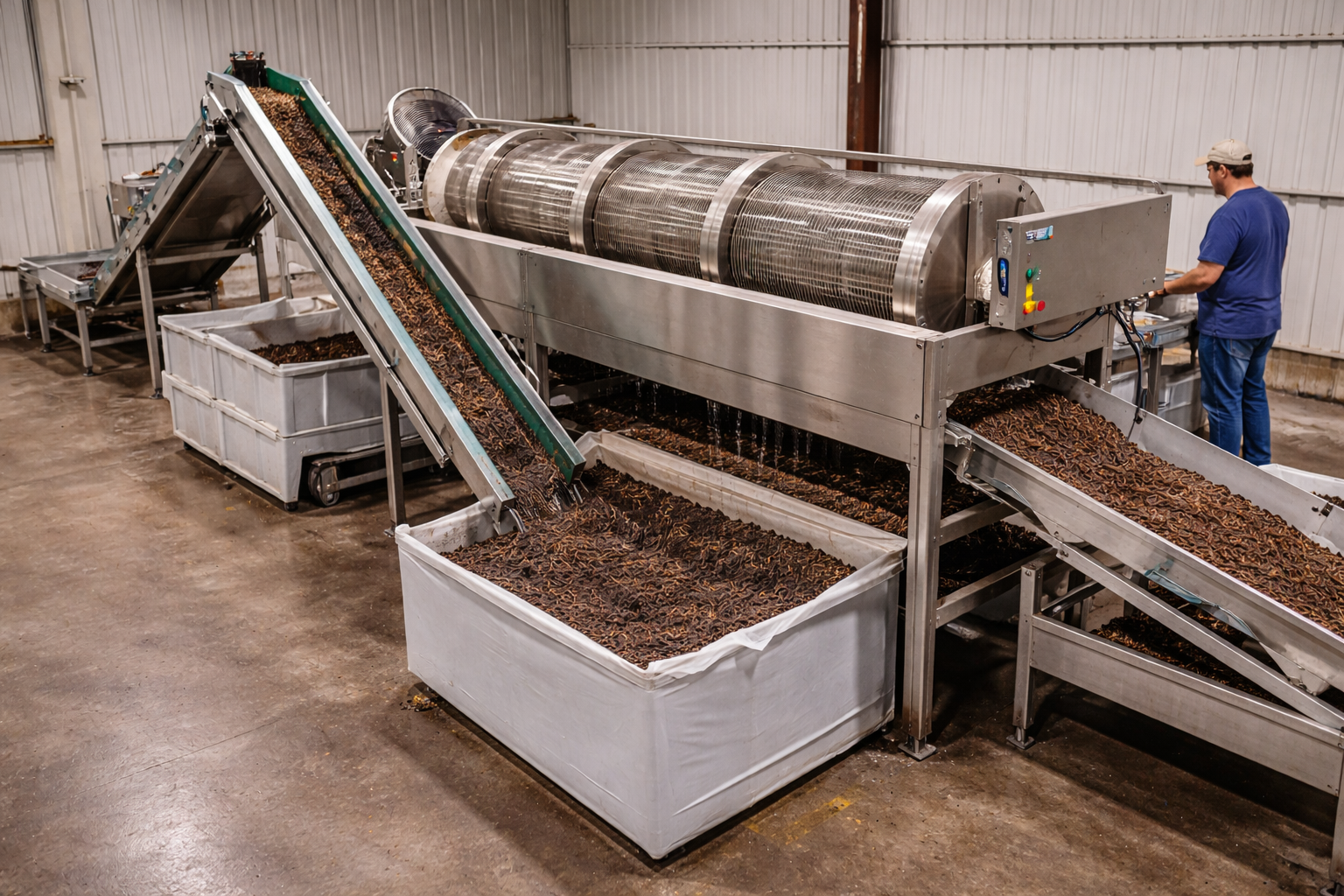
Commercial systems are designed for volume.
Common types
- Motorised trommels
- Vibratory sifters
- Multi-stage separators
Pros
- Fast and consistent
- Minimal labour
- High output
Cons
- High cost
- Requires space and power
These machines are best suited to commercial worm farms or serious side businesses.
Choosing the Right Method
The best method depends on your scale:
- Small bin: hand sorting or light separation
- Regular home use: sieve or DIY screen
- High output: trommel or shaker table
- Commercial: powered separators
The Most Important Tip
Whatever method you use, remember this:
Worms are tougher than they look, but stress slows them down.
Work slowly, avoid crushing, and return worms to fresh bedding promptly. Healthy
