

Composting can feel slow, especially when you want usable compost sooner. If you are wondering how to make compost faster, a few small changes can make a big difference.
This guide shares practical ways to speed up composting in UK gardens, whether you use a compost heap or a bin.
Why Compost Sometimes Takes So Long
Most slow compost heaps suffer from one (or more) of these issues:
- Too much moisture
- Not enough airflow
- Poor mix of materials
- Large scraps that take ages to break down
- Cold weather slowing microbial activity
Fix these and you’ll see decomposition improve quickly.
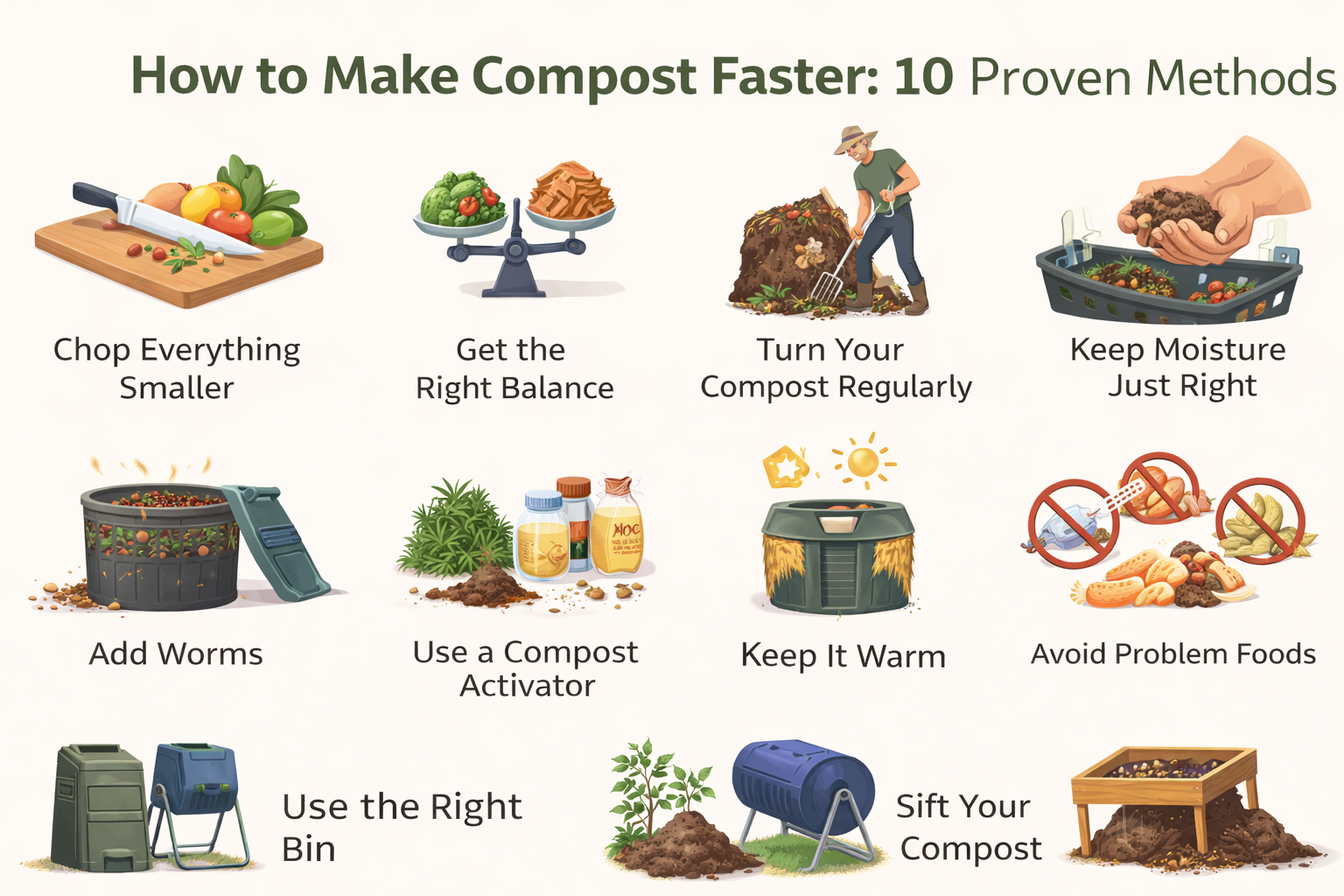
How to Make Compost Faster in the UK
1. Chop Waste Smaller
Smaller pieces break down quicker. Chop vegetable peelings, tear cardboard and break up garden waste before adding it.
2. Balance Greens and Browns
Your compost needs a mix of:
- Greens: food scraps, grass cuttings, coffee grounds
- Browns: cardboard, dry leaves, shredded paper
A good balance prevents smells and helps materials decompose efficiently.
3. Turn the Heap Regularly
Oxygen is essential. Turning every one to two weeks introduces air and redistributes materials, which helps everything rot down faster.
4. Keep Moisture in the “Wrung-Out Sponge” Zone
Compost should be damp, not dripping.
- Too dry? Add a little water or fresh greens.
- Too wet? Mix in cardboard, dry leaves or shredded paper.
5. Add Worms or Try a Worm Bin
Worms help process organic waste and improve compost quality.
If you want to set up a separate worm system, see our guide to
worm composting for beginners.
For feeding guidance, read
how much to feed your worms.
6. Use Natural Activators
You do not need expensive additives. Try:
- Fresh grass cuttings
- Coffee grounds
- A few handfuls of finished compost
These can boost microbial activity.
7. Keep the Bin Warm
Warmth speeds decomposition. In the UK, a sheltered spot helps, and insulating the bin in winter can keep activity ticking along.
8. Avoid the Worst Offenders
Some foods attract pests and slow the process.
Full list here:
What food scraps should never go in compost
- Meat and fish
- Dairy
- Oily foods
- Cooked leftovers
9. Choose a Bin That Holds Heat
Closed bins retain warmth better than open heaps. Compost tumblers can also help because turning is effortless.
10. Sift to Use Compost Sooner
Screening removes larger bits so you can use the finished compost while the chunky pieces go back in to continue breaking down.
Methods here:
Ways to sift worms from castings
How Quickly Can Compost Be Ready?
- 4–6 weeks – hot composting (high effort, fast results)
- 2–3 months – well-managed bin with turning
- 6–12 months – low-effort heap
The biggest drivers of speed are airflow, moisture balance and material size.
Common Mistakes That Slow Things Down
- Adding too much food at once
- Never turning the pile
- Letting it get waterlogged
- Using only “greens” without enough cardboard/leaves
Final Thoughts
If you want to know how to make compost faster, focus on the basics: smaller scraps, the right mix of greens and browns, plenty of air, and steady moisture. Keep it warm where you can, and you’ll get usable compost far sooner.
FAQ
Can I speed up compost in winter?
Yes. Keep the bin covered and consider insulating it to retain warmth.
Does turning compost really help?
Yes. Oxygen is one of the biggest factors in faster decomposition.
Do worms help compost break down faster?
They can, especially in a worm bin, and they improve compost quality too.
