

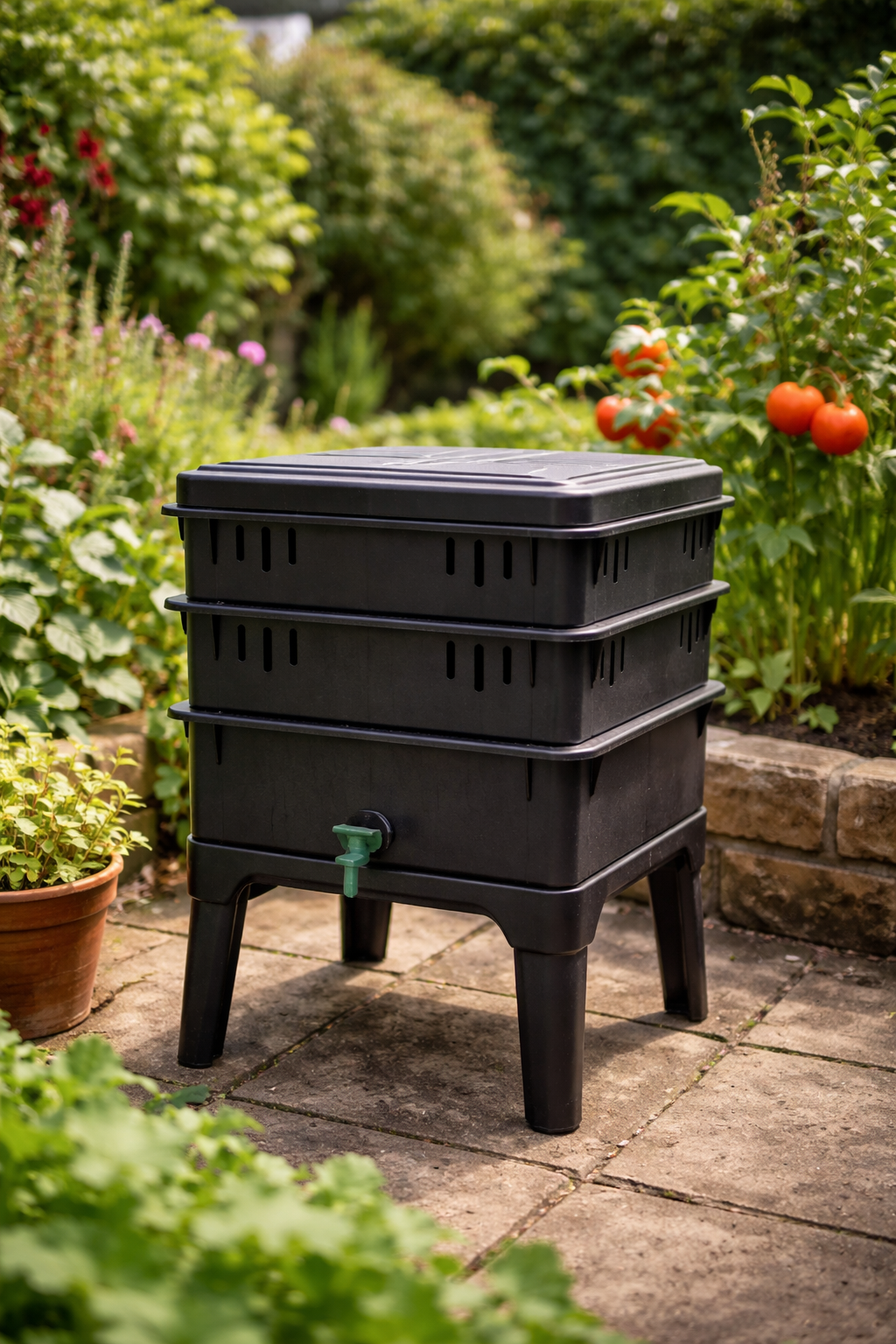
If you’re wondering how much should I feed my worms, the answer depends on your bin size, feeding schedule, and how established your worm colony is.
One of the most common mistakes people make with worm bins is feeding them too much, too quickly. Worms are incredibly efficient recyclers, but they are not rubbish bins — and overfeeding is the fastest way to turn a healthy system into a smelly, fly-ridden mess.
This guide explains exactly how much to feed a 50-litre worm bin, how often to feed it, and how to tell when your worms are ready for more. Everything here is based on steady, low-risk feeding that keeps worms healthy and compost clean.
Understanding Your Worm Bin
A 50-litre worm bin is considered a small to medium home system. It’s ideal for kitchen scraps from one household, but it does have limits.
If you’re using a compact system such as a 50-litre home worm farm, the key to success is consistency rather than volume. These bins are designed to process waste gradually, not all at once.
If your bin is new, or your worms were recently added, feeding needs to start very lightly.
How Much Should You Feed a 50-Litre Worm Bin?
As a general rule:
- Start with 100–150 grams of food once per week
- Increase gradually as the worms establish
- Only add more food once the previous feed is mostly gone
For a well-established 50-litre bin with healthy worms, such as a stacked tray wormery designed for home use, you may eventually feed up to:
- 300–500 grams per week
This is not a target to rush towards. Many successful worm bins operate comfortably at the lower end of this range.
Why Overfeeding Causes Problems
Worms don’t eat fresh food scraps straight away. Microbes and bacteria break the food down first, and the worms feed on that process.
When too much food is added to a small system like a 50-litre worm bin:
- Food rots faster than worms can process it
- Smells develop
- Fruit flies and fungus gnats appear
- The bin can heat up or turn acidic
If your bin smells unpleasant, it is almost always being fed too much.
How Often Should You Feed Worms?
For a 50-litre worm bin, once a week is ideal.
This feeding schedule suits most home wormeries and makes it easy to monitor what’s happening inside the bin.
Weekly feeding allows you to check:
- Whether the last feed has been eaten
- Moisture levels in the bedding
- Any signs of stress or imbalance
Feeding little and often is far better than feeding large amounts less frequently.
How to Tell When Worms Are Ready for More Food
Before adding fresh scraps, lift the bedding gently and look underneath.
Your worms are ready for more food when:
- Most of the previous scraps are no longer recognisable
- There is no sour or rotten smell
- Worms are active and spread throughout the bin
If you can still clearly see old food, wait another few days.
What Foods Work Best in Small Worm Bins
In a 50-litre system, softer foods break down more reliably and reduce the risk of smells.
Good options include:
- Vegetable peelings
- Soft fruit scraps
- Used tea bags (plastic-free)
- Crushed eggshells (small amounts)
- Shredded cardboard or paper (as bedding)
Chopping food into smaller pieces makes a noticeable difference, especially in compact worm farms designed for home gardens.
Foods to Limit or Avoid
Some foods are slow to break down or cause imbalance, particularly in smaller bins.
Avoid or strictly limit:
- Large amounts of citrus
- Onions and garlic
- Cooked food
- Dairy or meat
- Oily or salty scraps
These items can cause smells, acidity, and worm stress very quickly.
Where and How to Add Food
Never spread food across the whole surface of the bin.
Instead:
- Bury food in one corner or section
- Cover it fully with bedding
- Rotate feeding spots each week
This feeding method works particularly well in tray-based systems like a home wormery with multiple trays, as it encourages worms to move upwards naturally.
Moisture Matters as Much as Food
Overfeeding often goes hand-in-hand with excess moisture.
Your bin should feel like a wrung-out sponge — damp but not dripping. If it’s too wet:
- Add dry cardboard or shredded paper
- Reduce food input temporarily
Dry bins slow worm activity, while wet bins cause smells.
How Long Before You Increase Feeding?
For new bins, expect:
- 2–4 weeks before worms settle in
- 6–8 weeks before feeding increases noticeably
Let the worms set the pace. A slower system is a healthier one.
The Simple Rule to Remember
If you remember nothing else, remember this:
When in doubt, feed less.
Worms can survive missed feeds far better than they can survive overfeeding. A clean-smelling, well-balanced bin is a sign that everything is working exactly as it should.
With the right feeding routine, a 50-litre worm bin can quietly turn food waste into rich worm castings with very little effort.
