

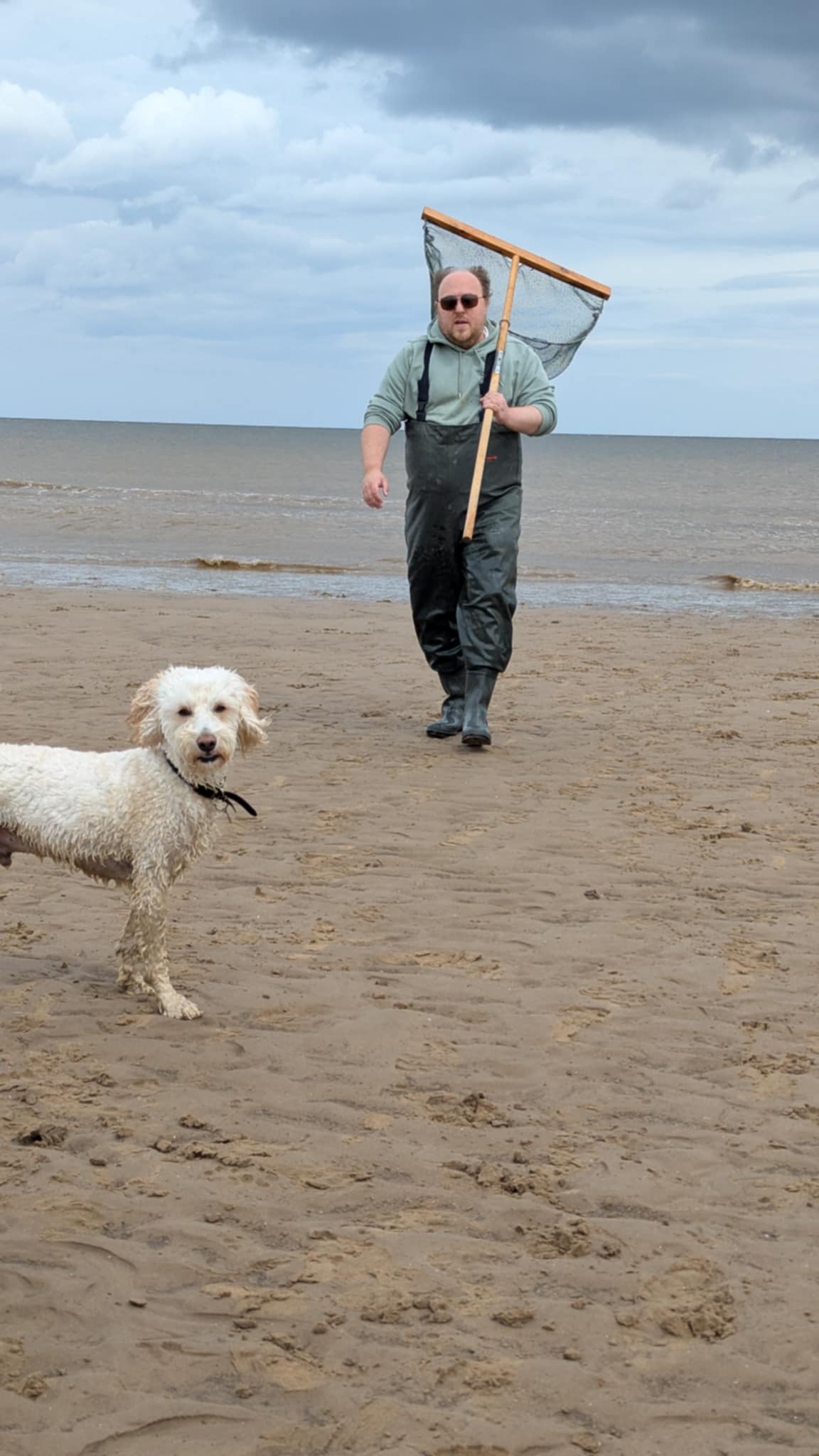
I had been dreaming about it for months. Shopping online for all the gear, but finding it really hard to get out and get a proper idea of how it all worked. Between a full time job, children to look after, and planning around the other half, it made things difficult to organise.
My mate moving to the coast finally gave me my opportunity — or excuse — to make the two and a half hour journey and push my net through the low tide water in search of some of those beauties.
Brown shrimp – hard to find, worth the effort
Crangon crangon, or brown shrimp, are, in my opinion, one of the tastiest seafoods around. However, they are devilishly difficult to get hold of. Living in the middle of the UK, about as far away from the coast as you can get while still being on this island, there are perishingly few fishmongers around. Even when you do find one, they don’t always decide to stock this seaside treat.
This is what led me to hunt for my own brown shrimp.
Timing the tide
I got to my friend’s house and we exchanged a few pleasantries, but watching the clock I knew we were close to low tide. There would be time for talk later. We headed straight off to the beach, trolley full of gear, getting down to the water line just as the tide was about to turn.
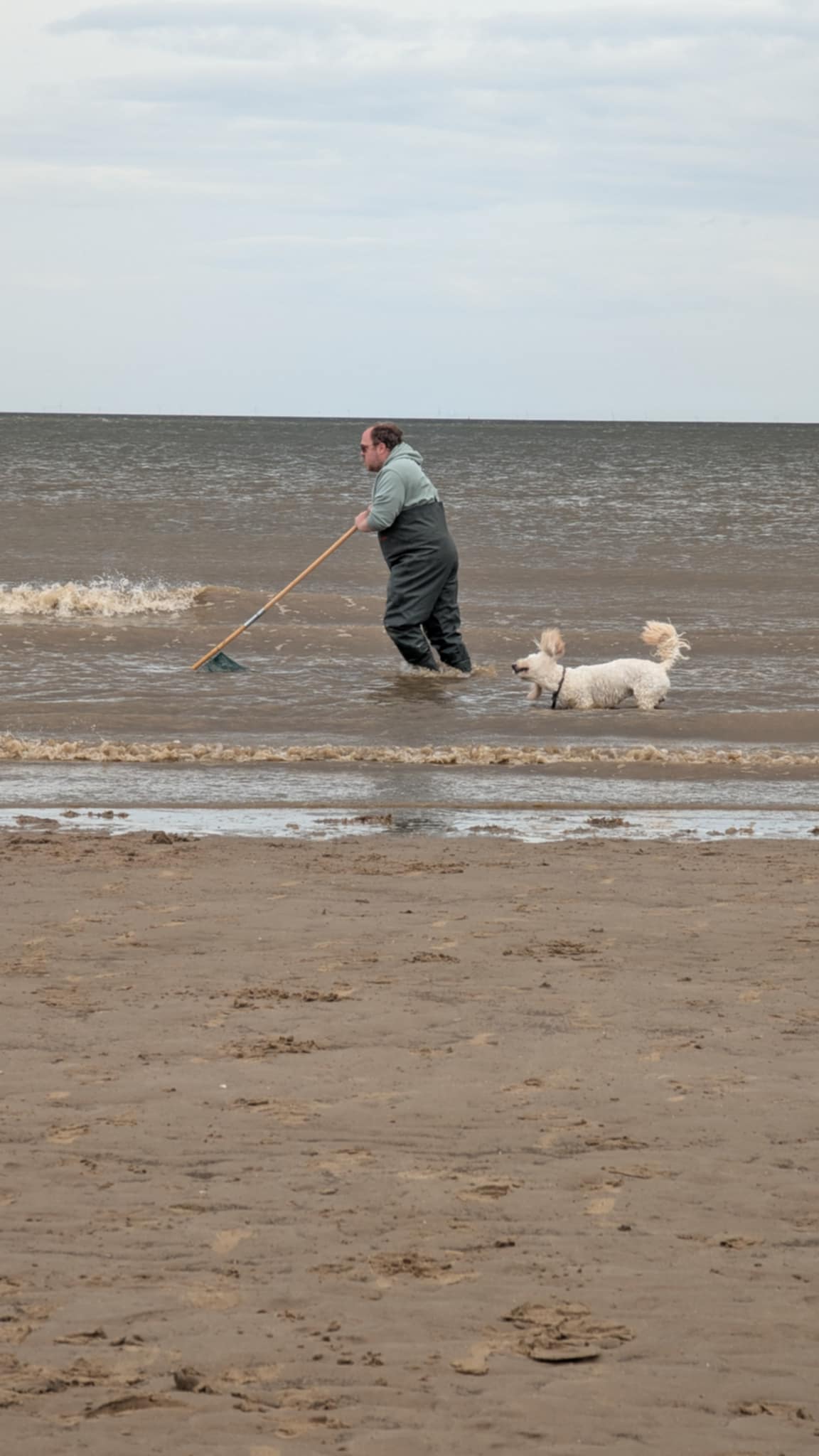
Once in the water, waders on, I pushed my net for about thirty metres up the shoreline. In only a few inches of water, the push net sank around two inches into the sand, kicking up everything in its path and depositing it into the net.
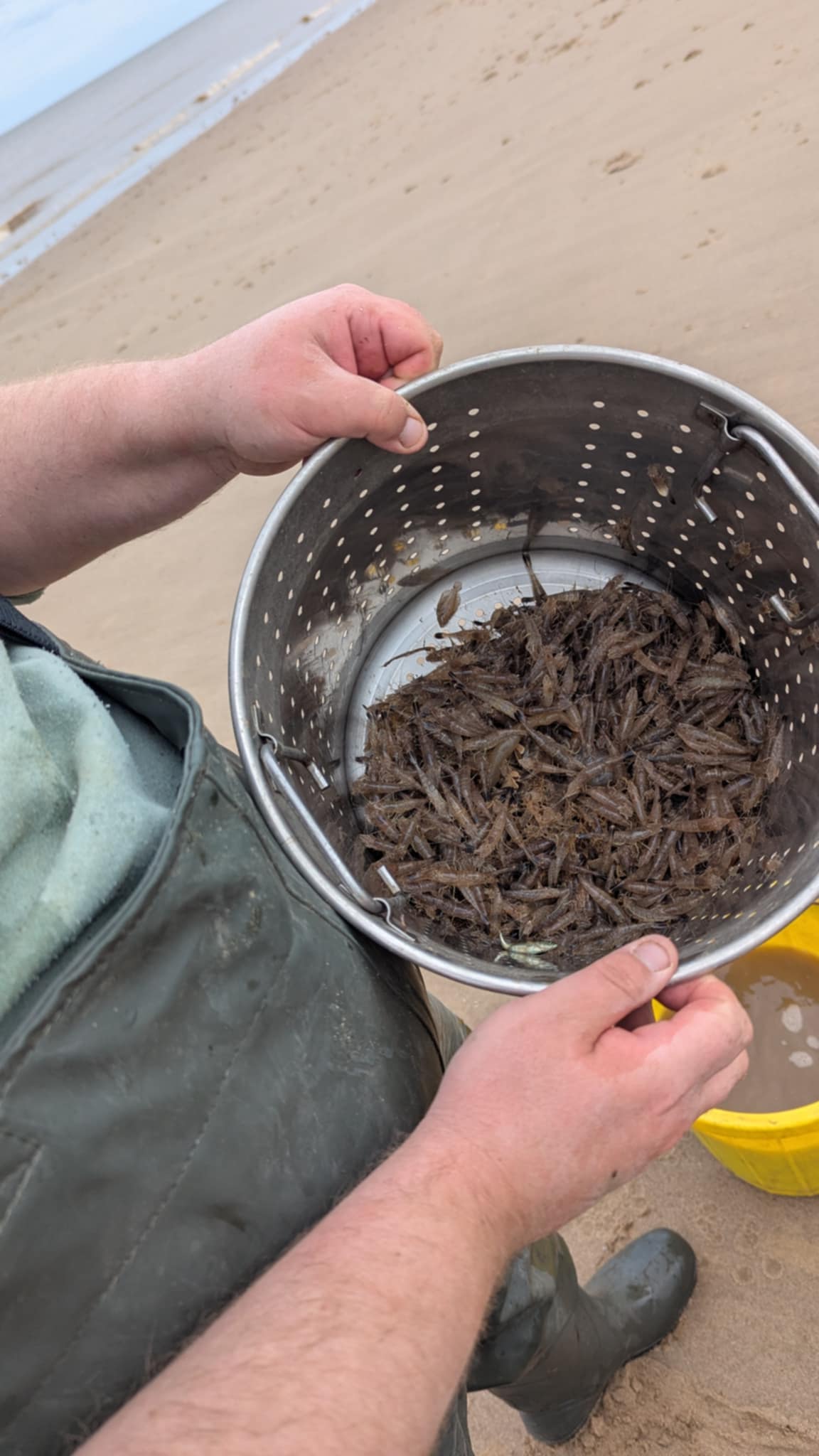
I lifted up my net to have a look and bingo! It was full of the sweet brown shellfish I was after, with a smattering of minuscule crabs and flatfish dotted around. By-catch released, I tipped the haul into my keeping bucket and went again.
Following the tide up the beach, I quickly realised the shrimp were only to be found right at the low tide mark or further out. They weren’t hanging around on the beach waiting for the water to come back in. With every push, I was forced to wade into deeper water just to keep the same level of catch.
First lesson learned: next time, get there before low tide.
From shoreline to saucepan
After a couple of hours of pushing and wading, I had what I thought was a decent amount of shrimp. We headed back to my friend’s house and boiled them up. They’re so small they literally only need a minute in boiling water before they’re done.
After chilling with my friend for the evening and sleeping over with the cooked shrimp in the fridge, I said my farewells and made my way home. That’s when the real labour of love began — peeling the tiny blighters.
Peeling brown shrimp – the hard way
These are the smallest shellfish you can imagine. Smaller than even the tiniest prawn you’d see in a supermarket, and I had hundreds of them. It’s not a job you’re going to finish in an hour, especially once you realise there’s a definite technique involved.
The technique (for right-handed people)
- With the thumb and forefinger of your left hand, lightly pinch the head
- Pinch the body with your right hand and gently snap it side to side to loosen the shell
- Pinch the tail and pull off as much of the shell as possible
- This should expose a small piece of tail meat
- Hold the tail meat very gently using only finger friction — any pressure and it will break
- Grip the head top and bottom and pull it away from the tail (don’t pull the tail from the head)
If all goes well, you’re left with a neat little piece of tasty seafood. If not, you’re cursing, throwing that one into the compost, and angrily reaching for the next.
Do this a few hundred times and you’ve got yourself a fantastic ingredient for a proper meal — or, like me, a very moreish bar snack. I put mine in the freezer for another day.
Trip complete
Trip over, shrimp processed, and safely stored in the food bank, I was left with a real sense of satisfaction. I’d learnt another way of gathering my own food and walked away with a head full of ideas on how to improve things next time I go shrimping.
