

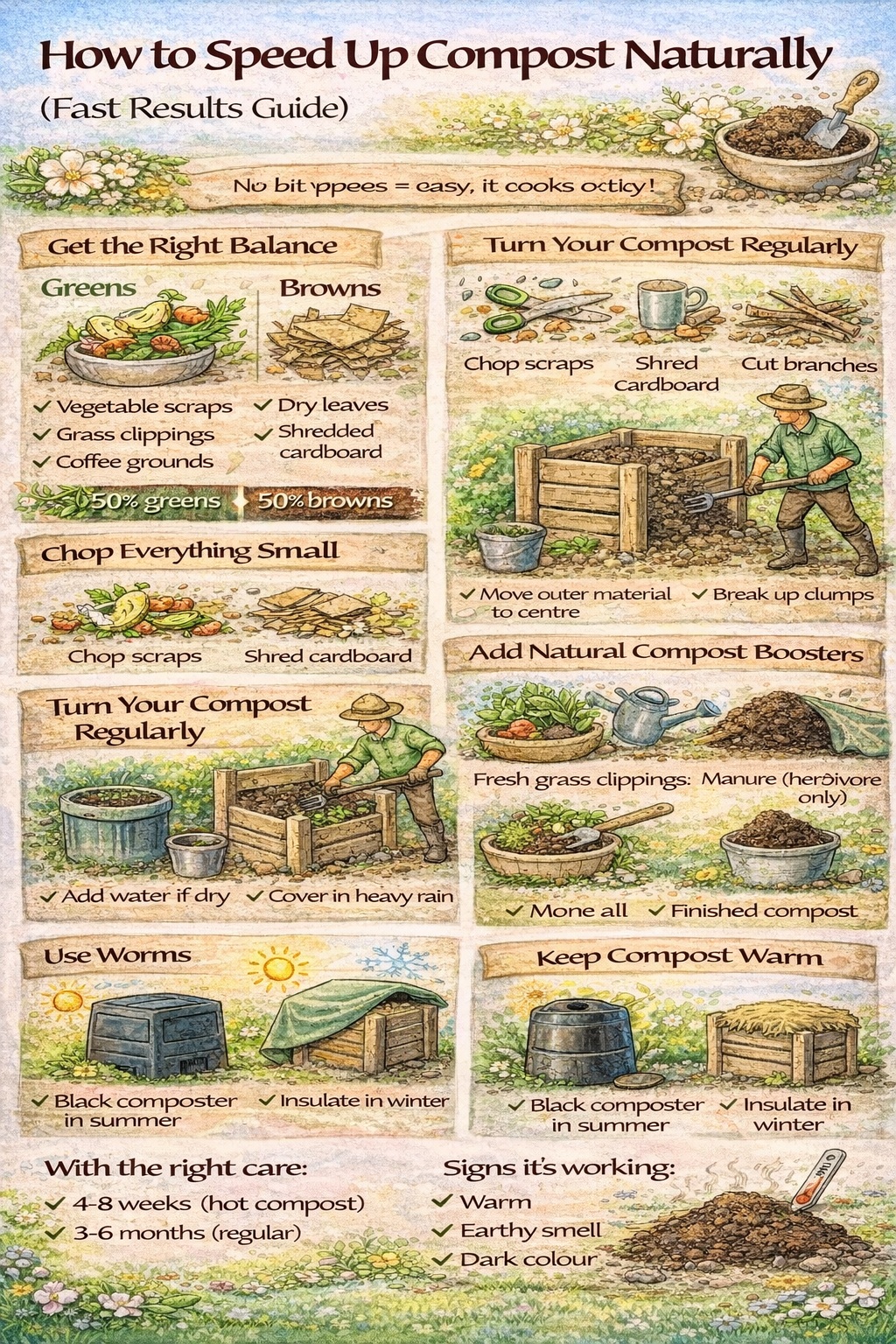
If your compost pile is taking months to break down, don’t worry – it’s completely normal. However, there are simple ways to speed up compost naturally without chemicals or expensive tools.
This guide shows you proven methods to help your compost break down faster and produce rich, usable soil in less time.
Why Compost Can Be Slow
Slow composting usually happens because:
- Not enough air
- Too dry or too wet
- Wrong balance of materials
- Large food scraps
- Cold temperatures
Fixing these issues makes a huge difference.
Get the Right Balance
Compost needs both greens (nitrogen) and browns (carbon).
Greens
- Vegetable scraps
- Grass clippings
- Coffee grounds
Browns
- Dry leaves
- Shredded cardboard
- Straw
Aim for a 50/50 mix. Too many greens cause smell, too many browns slow things down.
Chop Everything Small
Smaller pieces break down faster.
- Chop food scraps
- Shred cardboard
- Cut branches into small pieces
This increases surface area for microbes.
Turn Your Compost Regularly
Oxygen is essential.
- Turn every 7–10 days
- Move outer material to centre
- Break up clumps
This keeps microbes active.
Keep Moist (Not Wet)
Compost should feel like a damp sponge.
- Add water if dry
- Add browns if soggy
- Cover in heavy rain
Add Natural Compost Boosters
These speed up decomposition:
- Fresh grass clippings
- Coffee grounds
- Manure (herbivore only)
- Finished compost
A handful jump-starts microbes.
Use Worms to Speed Things Up
Worms break down waste incredibly fast.
- Red wigglers work best
- Feed little and often
- Keep bedding moist
Learn feeding amounts here:
How much should I feed my worms?
And when it’s time to harvest castings:
Ways to sift worms from castings
Keep Compost Warm
Heat speeds up decomposition.
- Place bin in sun
- Insulate in winter
- Use black bins
Warm compost = faster results.
Cover Your Pile
Covering helps:
- Retain heat
- Prevent rain soaking
- Stop pests
Use lids or tarpaulin.
How Long Will It Take?
With good care:
- 4–8 weeks (hot compost)
- 3–6 months (regular)
Much faster than neglecting it.
Signs Your Compost Is Working
- Warm centre
- Earthy smell
- Steam when turning
- Dark colour
Common Speed Mistakes
- Too much food waste
- Never turning
- Letting it dry out
- Adding big chunks
Final Thoughts
Learning how to speed up compost is all about balance, air and moisture.
With small changes, you can turn waste into rich compost much faster.
FAQ
Can I add urine to compost?
Yes – diluted, it adds nitrogen.
Do compost activators work?
Most are unnecessary.
Can I compost in winter?
Yes – it just slows.
