

Making your own compost is one of the best things you can do for your garden. It reduces waste, improves soil health and saves money on fertilisers. Learning how to make compost at home is simple once you understand the basics.
This guide walks you through everything step-by-step, even if you’ve never composted before.
Why Composting Is Worth It
Composting turns kitchen and garden waste into nutrient-rich soil. Benefits include:
- Healthier plants
- Improved soil structure
- Better water retention
- Reduced landfill waste
- Free natural fertiliser
It’s environmentally friendly and incredibly satisfying.
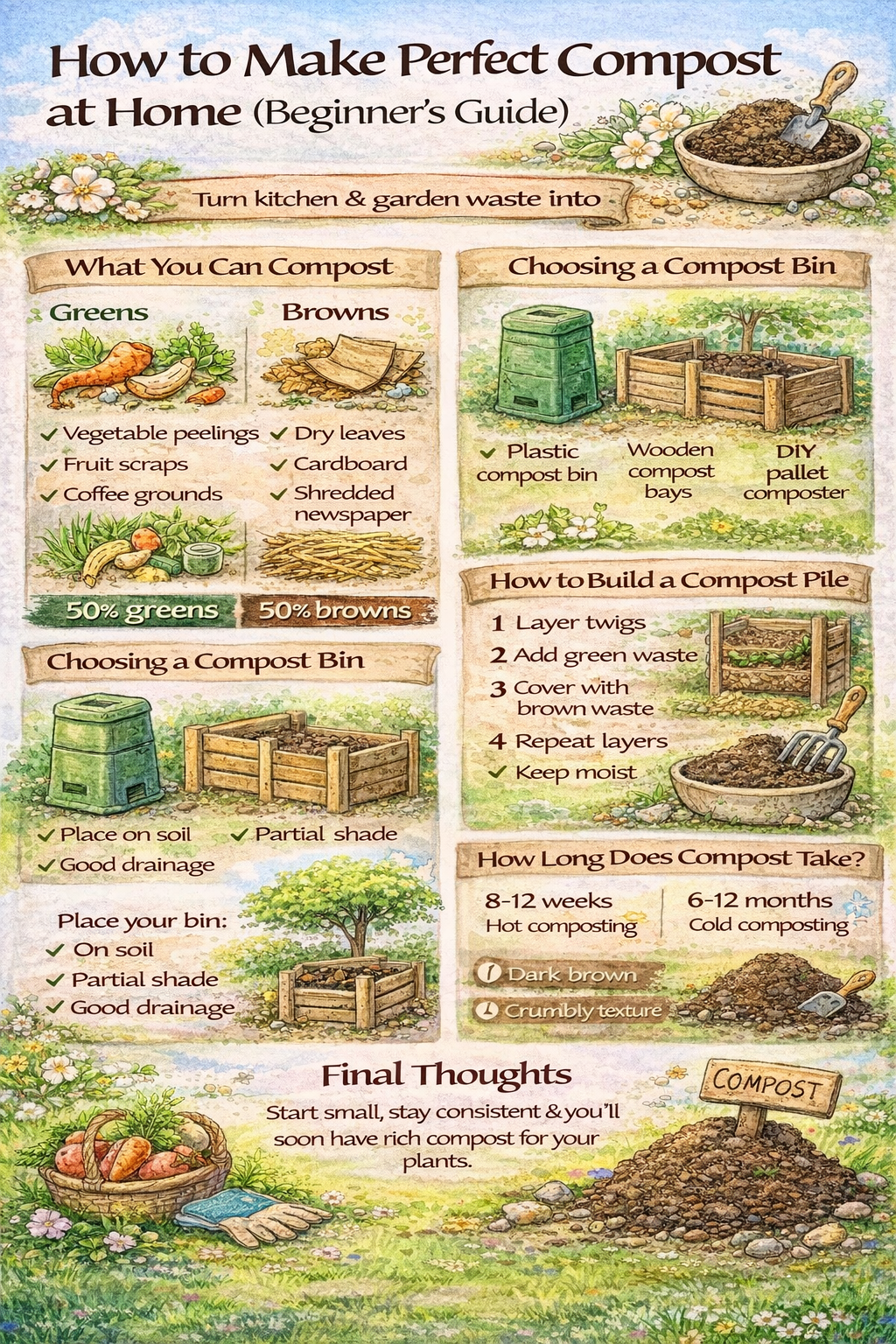
What You Can Compost
Greens (Nitrogen-rich)
- Vegetable peelings
- Fruit scraps
- Coffee grounds
- Fresh grass clippings
- Tea bags (plastic-free)
Browns (Carbon-rich)
- Dry leaves
- Cardboard
- Shredded newspaper
- Wood shavings
- Straw
Aim for roughly 50% greens and 50% browns.
What NOT to Compost
- Meat or fish
- Dairy products
- Cooked food
- Diseased plants
- Pet waste
These attract pests and cause bad smells.
Choosing a Compost Bin
You can use:
- Plastic compost bins
- Wooden compost bays
- Worm bins (vermicomposting)
- DIY pallet composters
Place your bin:
- On soil (not concrete)
- In partial shade
- With good drainage
How to Build Your Compost Pile
- Add a base layer of twigs for airflow
- Add green waste
- Cover with brown waste
- Repeat layers
- Keep moist (not wet)
Think “damp sponge” – not soaking.
Turning Your Compost
Turning introduces oxygen and speeds up decomposition.
- Turn every 1–2 weeks
- Move outer material to the centre
- Break up large clumps
This prevents bad smells.
How Long Does Compost Take?
Compost can take:
- 8–12 weeks (hot composting)
- 6–12 months (cold composting)
It’s ready when:
- Dark brown
- Earthy smell
- Crumbly texture
Using Your Compost
Use finished compost to:
- Mulch flower beds
- Improve vegetable soil
- Pot plants
- Top dress lawns
Your plants will thank you.
Composting with Worms
Worm composting (vermicomposting) is brilliant for small spaces.
- Red wigglers work best
- Feed little and often
- Keep bin moist
Learn more here:
How much should I feed my worms?
And if you want to separate worms later:
Ways to sift worms from castings
Common Compost Problems
Bad smell
Too wet or too many greens – add browns.
Not breaking down
Too dry – add water and turn.
Flies
Bury food scraps deeper.
Final Thoughts
Learning how to make compost at home is one of the easiest ways to become a more sustainable gardener.
Start small, stay consistent and you’ll soon have rich compost for your plants.
FAQ
Can I compost in winter?
Yes – it just slows down.
Does compost smell?
Not if balanced correctly.
Do I need worms?
No – but they help.
