

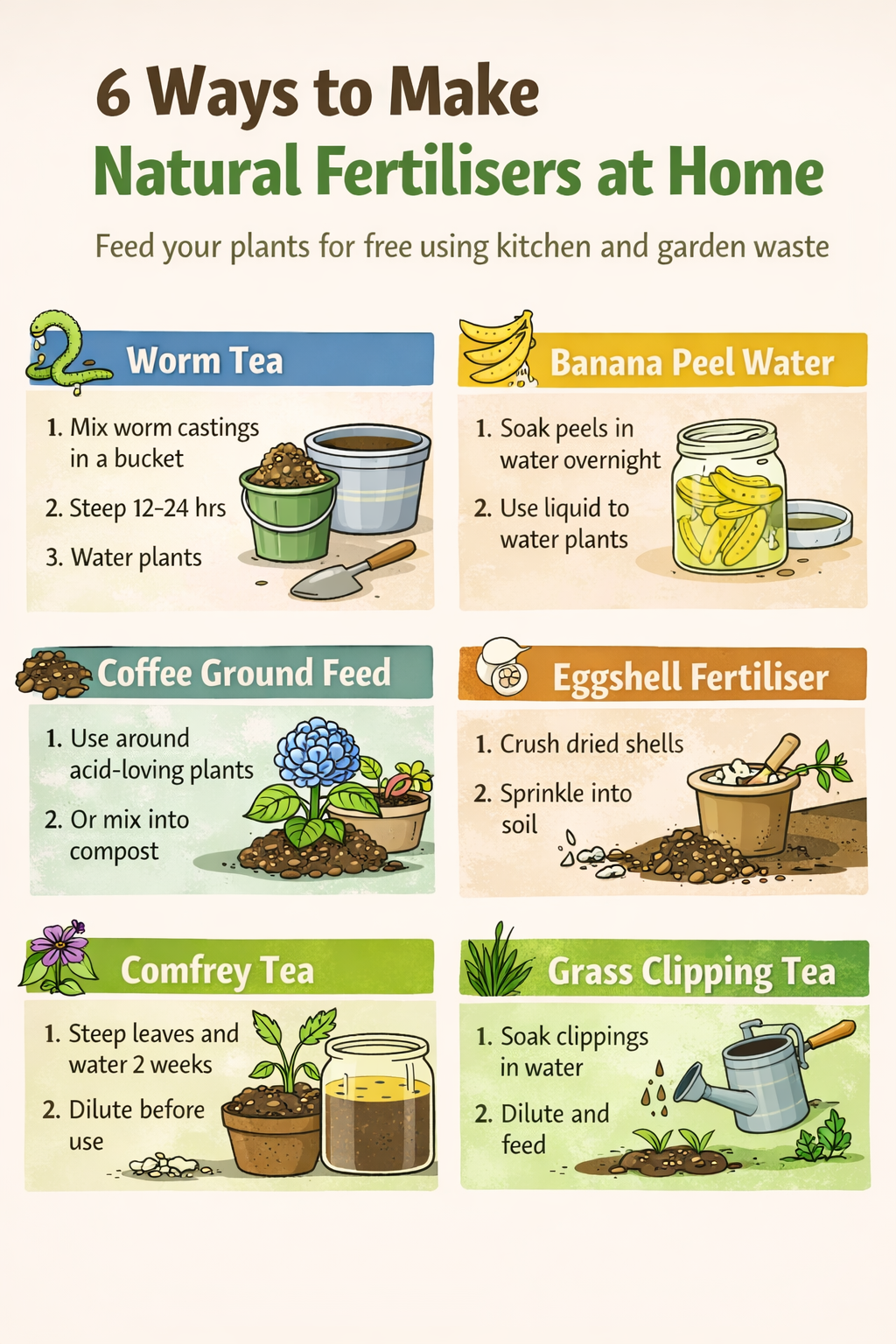
Shop-bought fertilisers can be expensive and often contain chemicals you may not want in your garden. The good news is that you can easily make natural fertilisers at home using everyday kitchen and garden waste.
This guide shows you simple, safe ways to feed your plants naturally while saving money and reducing waste.
Why Use Natural Fertilisers?
Homemade fertilisers offer many benefits:
- Cost-effective
- Eco-friendly
- Improves soil health long-term
- Safe for children and pets
- Uses waste you already have
They also encourage healthy microbes in the soil, which helps plants absorb nutrients more efficiently.
Easy Natural Fertilisers You Can Make at Home
1. Worm Tea
Worm tea is a nutrient-rich liquid made from worm castings.
- Mix a handful of castings in a bucket of water
- Let it steep for 12–24 hours
- Water plants at the base
Learn more in our guide to
worm composting.
2. Banana Peel Water
Banana peels are rich in potassium, which helps flowering and fruiting.
- Soak peels in water overnight
- Use the liquid to water plants
3. Coffee Ground Feed
Used coffee grounds add nitrogen to soil.
- Sprinkle lightly around acid-loving plants
- Or mix into compost
4. Eggshell Fertiliser
Eggshells provide calcium for strong plant growth.
- Rinse and dry shells
- Crush into powder
- Sprinkle into soil
5. Comfrey Tea
Comfrey leaves are packed with nutrients.
- Fill a bucket with leaves
- Add water and cover
- Leave for 2 weeks
- Dilute before use
6. Grass Clipping Tea
Fresh grass adds nitrogen.
- Soak clippings in water
- Dilute before using
How Often Should You Feed Plants?
- Leafy veg: every 2 weeks
- Flowering plants: every 10–14 days
- Fruit plants: weekly during growth
Always water soil before feeding to prevent root damage.
Common Mistakes to Avoid
- Overfeeding plants
- Using strong undiluted teas
- Applying to dry soil
- Ignoring plant-specific needs
Which Plants Love Natural Fertilisers?
- Tomatoes
- Courgettes
- Roses
- Herbs
- Houseplants
Final Thoughts
Making natural fertilisers at home is simple, cheap and better for your soil. By using waste materials wisely, you feed your plants and reduce your environmental footprint at the same time.
Start with one method and build from there – your garden will thank you.
FAQ
Are homemade fertilisers safe?
Yes, when diluted and used correctly.
Can I use these on houseplants?
Yes, but dilute more heavily.
Do natural fertilisers smell?
Some do (like comfrey tea), but the smell fades quickly.
