

If you grow your own food, you’ll quickly realise how important good storage is. Learning how to store vegetables without a fridge saves energy, reduces waste and keeps produce tasting better for longer.
This guide shares traditional, low-tech storage methods that have been used for generations – perfect for UK homes, sheds and allotments.
Why Store Vegetables Without Refrigeration?
Fridges are convenient, but they are not always ideal for fresh produce. Storing vegetables naturally:
- Preserves flavour and texture
- Uses no electricity
- Reduces plastic packaging
- Prevents chilling damage to certain crops
Many vegetables actually last longer in cool, dark, well-ventilated spaces.
Best Vegetables for Fridge-Free Storage
- Potatoes
- Carrots
- Beetroot
- Onions
- Garlic
- Squash
- Parsnips
- Apples (separate from veg)
Traditional Storage Methods
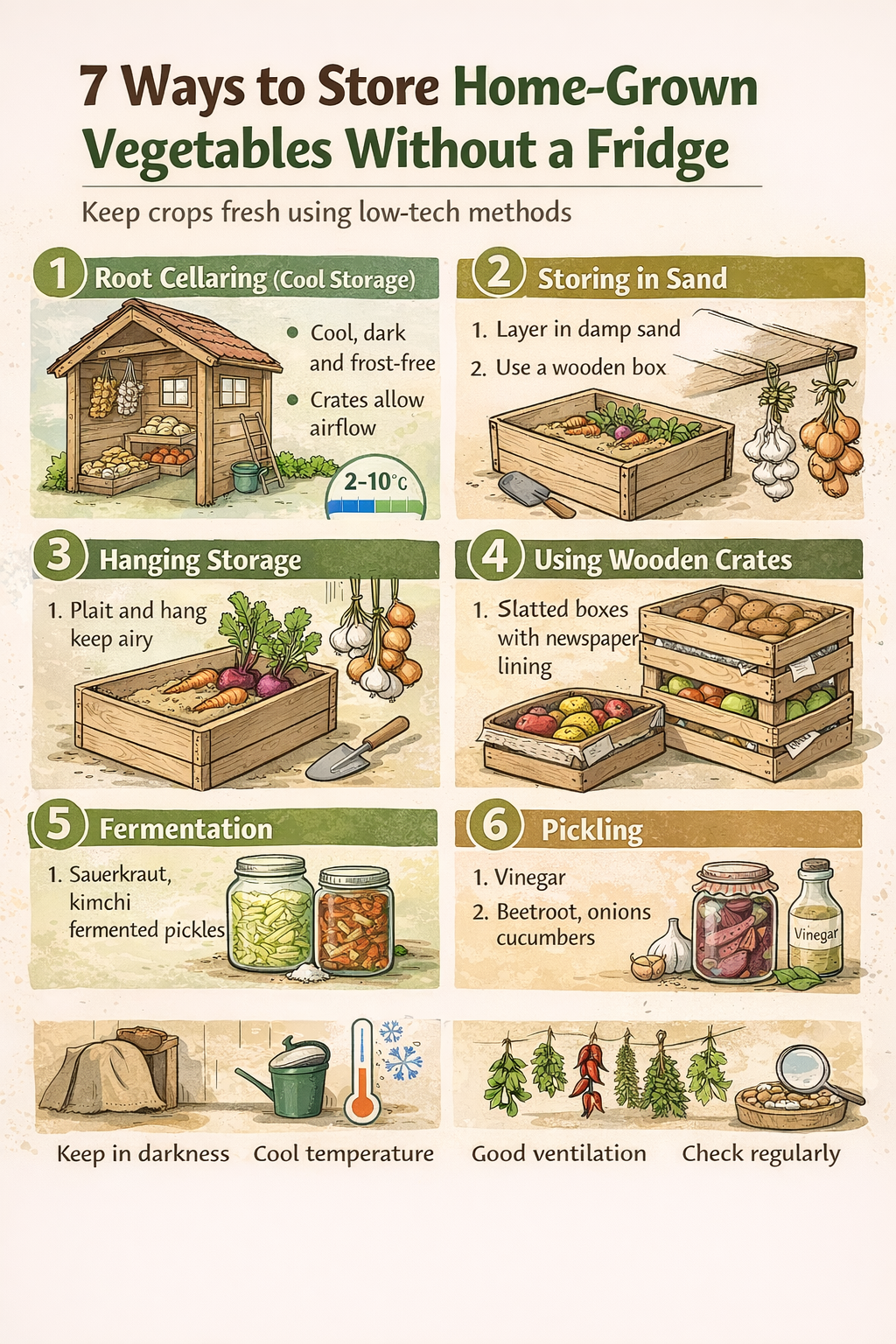
1. Root Cellaring (Cool Storage)
A root cellar does not have to be fancy. A shed, garage or cupboard works if it is:
- Cool (2–10°C)
- Dark
- Frost-free
Use crates or boxes to allow airflow.
2. Storing in Sand
Sand keeps roots fresh and prevents drying.
- Layer carrots or beetroot in damp sand
- Store in a wooden box or bucket
- Keep somewhere cool
3. Hanging Storage
Onions and garlic store best when hung:
- Plait stems together
- Hang in an airy place
- Avoid damp rooms
4. Wooden Crates
Use slatted boxes for:
- Potatoes
- Apples
- Squash
Line with newspaper to absorb moisture.
5. Fermentation
Great for cabbage, carrots and beetroot.
- Sauerkraut
- Kimchi
- Fermented pickles
These last for months without refrigeration.
6. Pickling
Vinegar preserves vegetables safely.
- Beetroot
- Onions
- Cucumbers
7. Drying
Works well for:
- Herbs
- Chillies
- Beans
Air-dry or use a dehydrator.
Storage Conditions That Matter
- Light: keep produce in darkness
- Temperature: cooler is better
- Airflow: prevents mould
- Humidity: roots like damp air
Common Mistakes
- Washing before storage
- Keeping onions near potatoes
- Using sealed plastic bags
- Storing damaged veg
How Long Will Vegetables Last?
- Potatoes – 2 to 5 months
- Carrots – 3 to 4 months (in sand)
- Onions – up to 6 months
- Squash – 2 to 4 months
Final Thoughts
Learning to store vegetables without a fridge connects you with traditional food skills and saves money. With the right conditions, many crops will last all winter.
Start with one method and build confidence from there.
FAQ
Can I store carrots without refrigeration?
Yes. Store them in damp sand in a cool place.
Should potatoes ever go in the fridge?
No. Cold temperatures affect flavour and texture.
What is the easiest method?
Hanging onions and storing potatoes in crates.
