

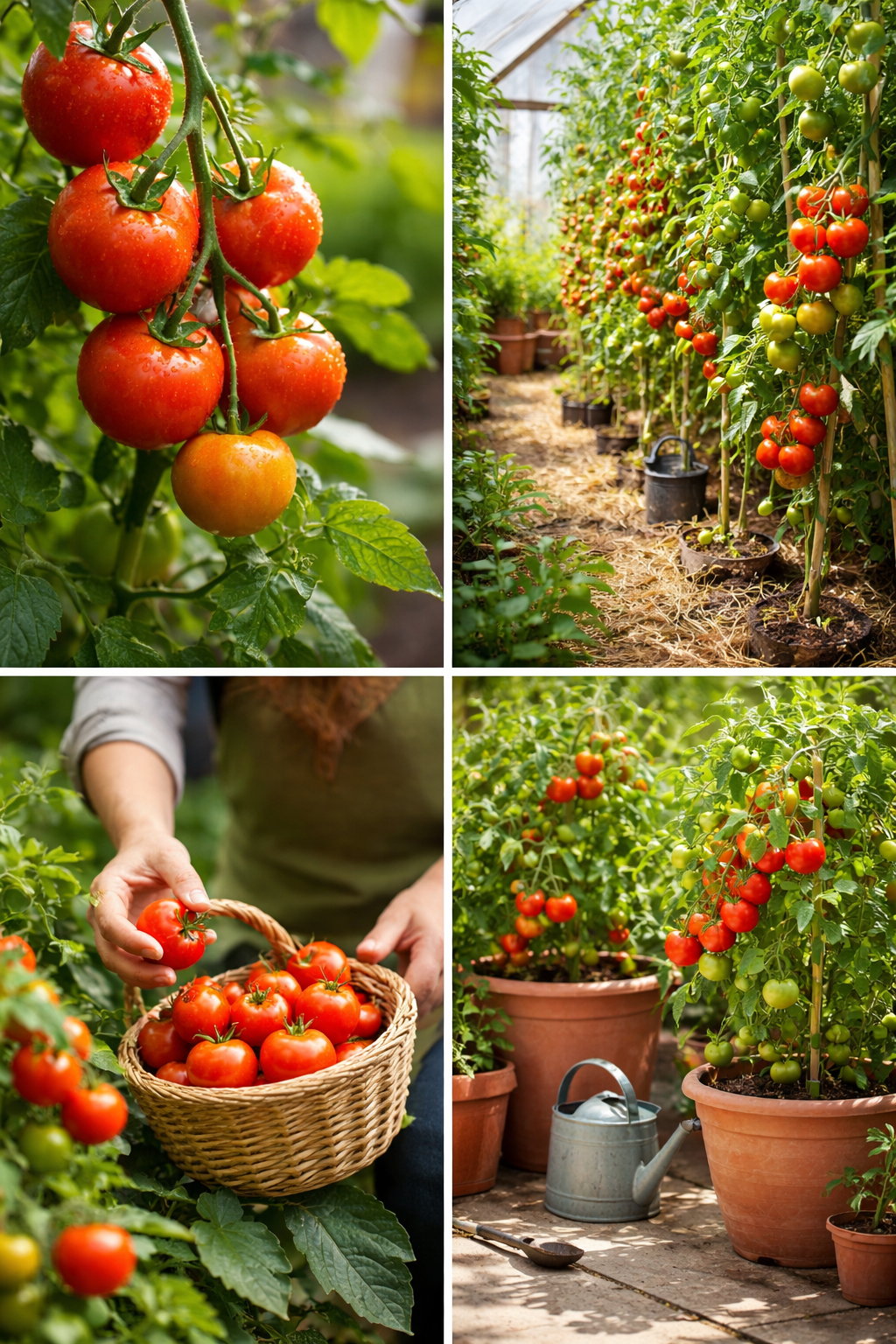
A practical, no-nonsense guide for gardens, greenhouses, and allotments.
Learning how to grow tomatoes in the UK is one of the most rewarding skills for any home gardener. There are few things more satisfying than picking a ripe tomato you’ve grown yourself — warm from the sun, slightly imperfect, and bursting with flavour. It’s a world away from the watery supermarket versions most of us have learned to tolerate. The good news is that tomatoes grow extremely well in the UK, as long as you work with our climate rather than against it.
This guide is written for real British conditions: changeable weather, cool nights, occasional heatwaves, and gardens that range from sprawling allotments to small patios. Whether you’re growing in the ground, in pots, or under cover, this is how to grow tomatoes properly — without gimmicks, shortcuts, or false promises.
Choose the Right Tomato Variety
The first step to perfect tomatoes is choosing varieties that actually suit the UK climate.
Broadly speaking, tomatoes fall into two growth types:
Cordons (indeterminate tomatoes)
These grow tall and continuously produce fruit over the season. They’re ideal for greenhouses, grow bags, or sheltered outdoor spots. Popular UK choices include cherry tomatoes, plum tomatoes, and classic salad varieties.
Bush (determinate tomatoes)
More compact plants that crop over a shorter period. These are better for pots, containers, and more exposed gardens.
For flavour and reliability in Britain, look for varieties described as:
- Suitable for outdoor growing
- Early cropping
- Blight resistant (especially if growing outside)
If you’re new to tomatoes, cherry varieties are the most forgiving and still deliver excellent flavour.
When and How to Start Tomato Seeds
In the UK, timing matters more than almost anything else.
Sow seeds from late February to late March if you have a warm windowsill or propagator. If not, early April is safer. Tomatoes need warmth to germinate — ideally around 18–22°C.
Sow seeds thinly in small pots or trays filled with fine compost. Lightly cover them and keep the compost just moist, not wet. Seedlings usually appear within 7–10 days.
Once they emerge:
- Give them as much light as possible
- Turn pots regularly to prevent leggy growth
- Keep them frost-free at all times
Tomatoes should only be planted outdoors after the risk of frost has passed, usually late May in most of the UK.
Potting On and Building Strong Plants
As soon as seedlings have two proper leaves, pot them on into individual pots. This stage is crucial — crowded roots lead to weak plants later on.
Bury the stem slightly deeper than before. Tomatoes can root along their stems, which helps create stronger plants.
Over the next few weeks:
- Keep compost moist but never waterlogged
- Avoid cold draughts
- Don’t rush them outside too early
Where to Grow Tomatoes
Outdoors
Choose the sunniest, most sheltered spot you have. South-facing walls are ideal. Tomatoes need at least 6–8 hours of direct sun to produce well.
Greenhouses & Polytunnels
This gives you the most control and the highest yields. Ventilation is essential — overheating causes flower drop and poor fruit set.
Pots and Containers
Use large pots (minimum 30cm deep). Tomatoes hate being cramped. Grow bags work well but need careful watering.
Soil and Compost: The Foundation of Flavour
Good tomatoes start in good soil.
Tomatoes are hungry plants. They need:
- Rich organic matter
- Good drainage
- Consistent moisture
For garden beds, dig in plenty of well-rotted compost or manure before planting. For pots, use a quality peat-free compost and consider mixing in homemade compost or worm castings for extra nutrition.
Avoid cheap composts that dry out too quickly — they lead to split fruit and stressed plants.
Planting Tomatoes Properly
- Space plants generously (crowded plants invite disease)
- Plant deep, burying part of the stem
- Water in thoroughly
For cordon varieties, install supports immediately — canes, strings, or frames. Don’t wait until plants are already flopping over.
Watering: The Make-or-Break Factor
Inconsistent watering is the main reason tomatoes fail.
Key rules:
- Water deeply, not little and often
- Aim for the soil, not the leaves
- Keep moisture consistent
In hot weather, tomatoes in pots may need watering once or even twice a day. Letting plants dry out and then flooding them causes split fruit and poor flavour.
Mulching with straw or compost helps keep moisture levels steady, especially outdoors.
Feeding for Proper Tomatoes (Not Just Leaves)
Tomatoes need feeding once flowers appear.
Start with a balanced feed, then switch to a high-potash tomato feed to encourage fruit development rather than leafy growth.
Feed little and often — once a week is usually enough. Overfeeding nitrogen leads to big plants with disappointing harvests.
Pruning and Training Tomatoes
For cordon tomatoes
- Remove side shoots regularly (the small shoots that appear between stem and leaf)
- Keep one main stem
- Tie in as plants grow
For bush tomatoes
- Minimal pruning
- Remove only damaged or overcrowded growth
Good airflow reduces disease and improves fruit quality.
Common UK Tomato Problems (and How to Avoid Them)
Blight
A major issue in wet summers. Avoid overhead watering, space plants well, and remove affected leaves immediately.
Blossom End Rot
Usually caused by inconsistent watering, not a lack of calcium in the soil. Keep moisture steady.
Poor Pollination
In greenhouses, gently shake plants on warm days to help flowers set fruit.
When to Harvest Tomatoes
Tomatoes should be fully coloured and slightly soft to the touch. If the weather turns cold late in the season, you can harvest green tomatoes and let them ripen indoors.
Never refrigerate tomatoes — it ruins the flavour and texture.
The Secret to Truly Great Tomatoes
Perfect tomatoes aren’t about expensive feeds or complicated systems. They come from:
- Choosing the right variety
- Consistent care
- Good soil
- Patience
Once you’ve tasted your own homegrown tomatoes, it’s hard to go back.
If you grow even a handful of plants well, you’ll have more flavour than most people get from an entire supermarket shelf — and that’s exactly what growing your own should be about.
