
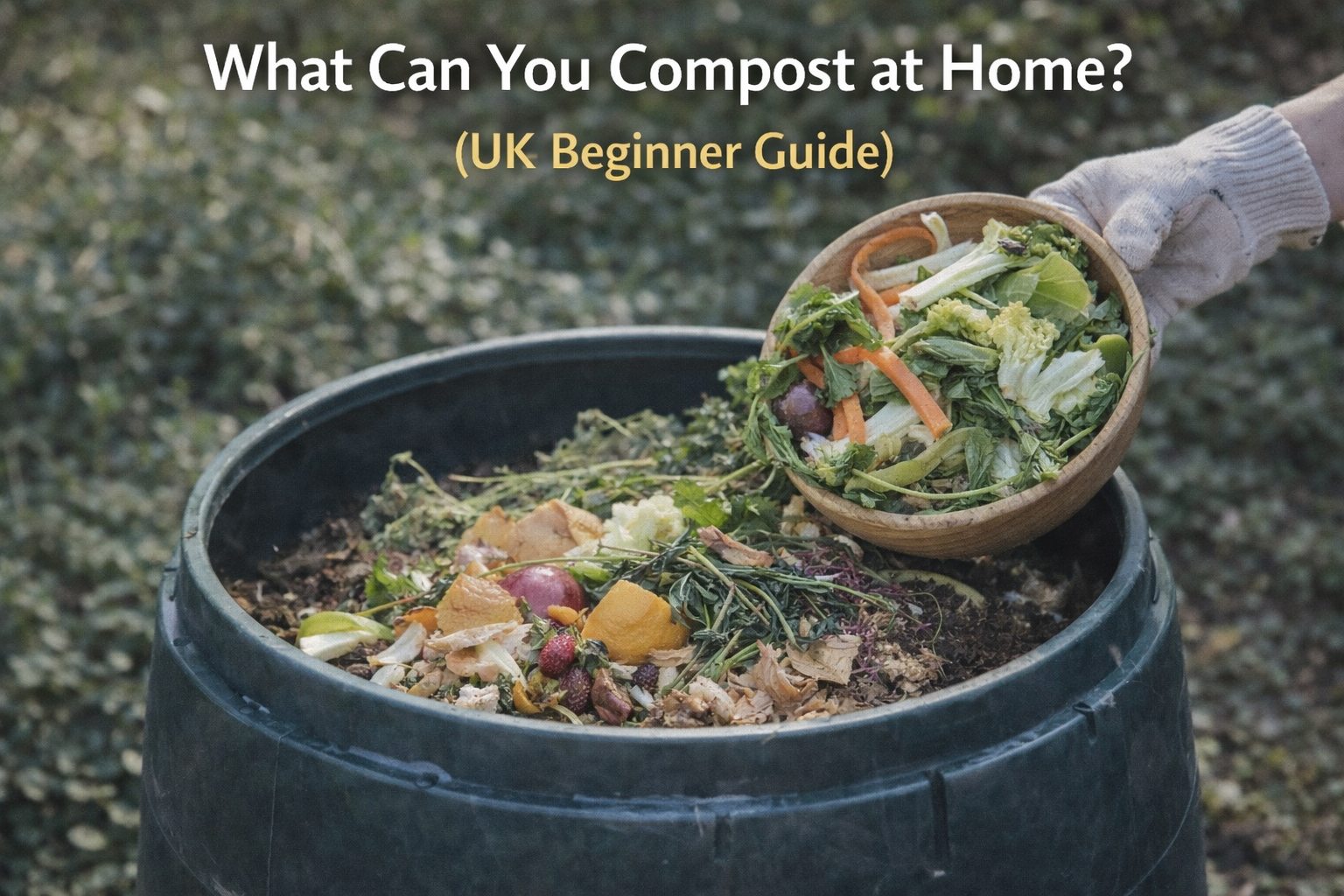
What can you compost at home? If you’re trying to live more sustainably, composting is one of the easiest ways to reduce waste and improve your garden soil.
This beginner-friendly UK guide explains exactly what you can and can’t compost, helping you avoid smells, pests and slow breakdown.
Why compost at home?
- Reduces landfill waste
- Creates free natural fertiliser
- Improves soil health
- Supports eco living
Kitchen waste you can compost
- Fruit & vegetable peelings
- Tea leaves & plastic-free tea bags
- Coffee grounds & filters
- Crushed eggshells
- Herb trimmings
Garden waste you can compost
- Grass clippings
- Dead leaves
- Plant cuttings
- Weeds (non-seeding)
- Small twigs
Paper items you can compost
- Shredded newspaper
- Cardboard (plain)
- Paper towels
- Toilet roll tubes
What NOT to compost
- Meat and fish
- Dairy products
- Oily foods
- Pet waste
- Plastic
Greens vs browns
Successful compost needs a balance:
- Greens: food scraps, grass
- Browns: cardboard, leaves
Common composting mistakes
- Too much food waste
- Not enough browns
- Letting it dry out
- Never turning the pile
How long does compost take?
Between 3–9 months depending on conditions.
FAQ
Can I compost bread?
Yes, in small amounts.
Can citrus go in compost?
Yes, but don’t overdo it.
Does compost smell?
Not if balanced properly.
Related guides
Helpful resources
Suggested tags: composting, eco living, garden waste
Suggested category: Gardening
