

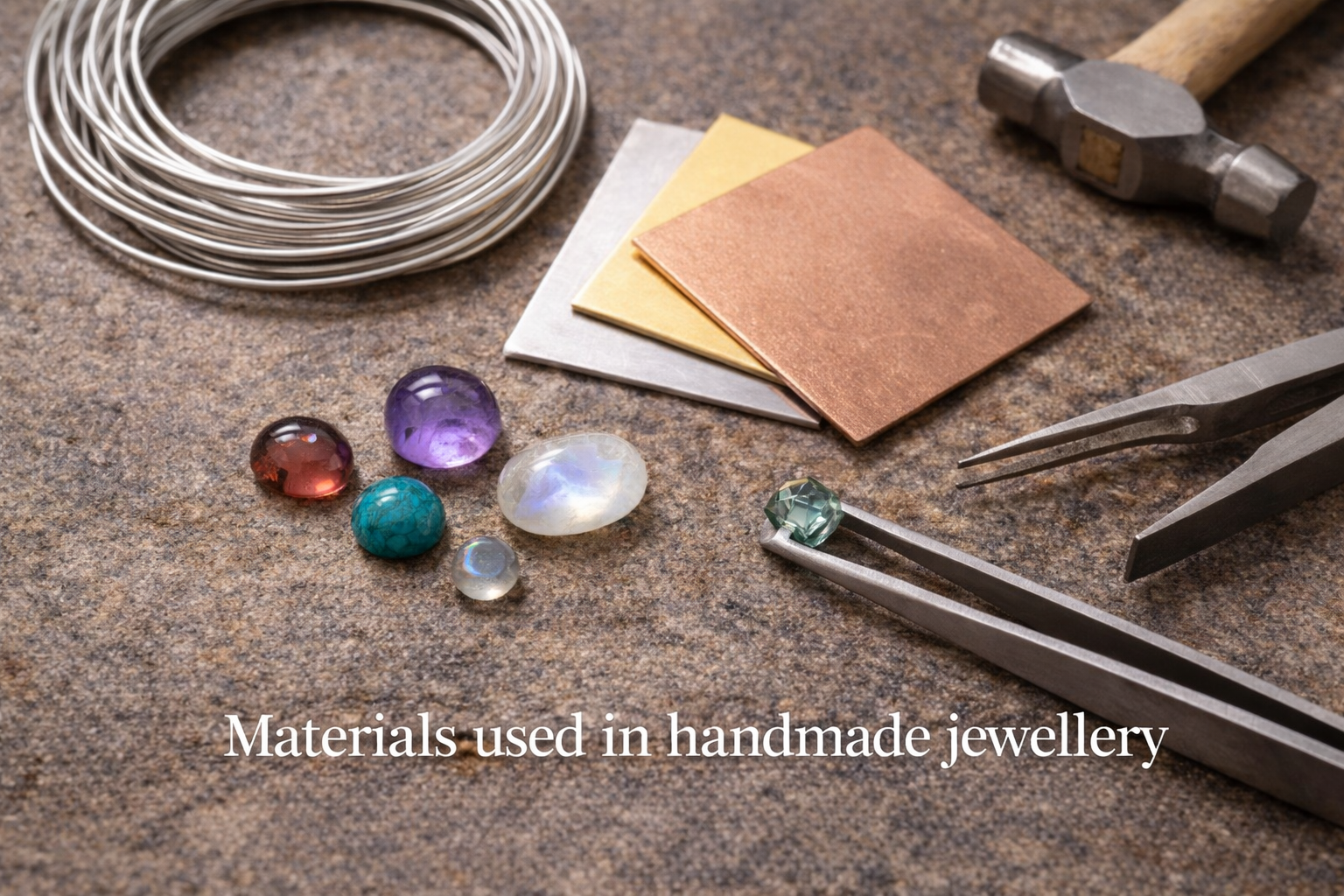
Understanding the materials used in handmade jewellery helps you appreciate both quality and craftsmanship. Unlike factory-made pieces, handmade jewellery often uses carefully chosen materials with ethical and artistic value.
Precious metals
Most handmade jewellery uses solid metals rather than plating.
- Sterling silver (925)
- Solid gold (9ct, 14ct, 18ct)
- Brass and bronze
These metals last longer and can be polished or repaired.
Recycled metals
Many makers now use recycled silver and gold.
- Reduces mining impact
- Lower carbon footprint
- Same quality as newly mined metal
This makes jewellery more sustainable.
Natural gemstones
Handmade jewellery often features:
- Moonstone
- Amethyst
- Garnet
- Turquoise
- Opal
Each stone has unique colour and meaning.
Organic materials
Some makers use:
- Wood
- Shell
- Pressed flowers
- Resin inclusions
These create nature-inspired designs.
Ethical sourcing
Look for jewellers who:
- Use fair-trade gemstones
- Support small suppliers
- Avoid conflict materials
How materials affect price
Cost depends on:
- Metal purity
- Gemstone rarity
- Hand labour involved
Higher quality materials last longer.
Helpful external resources
Related articles
Final thoughts
Knowing the materials used in handmade jewellery helps you buy smarter and value craftsmanship. Quality materials mean jewellery that lasts a lifetime.
