
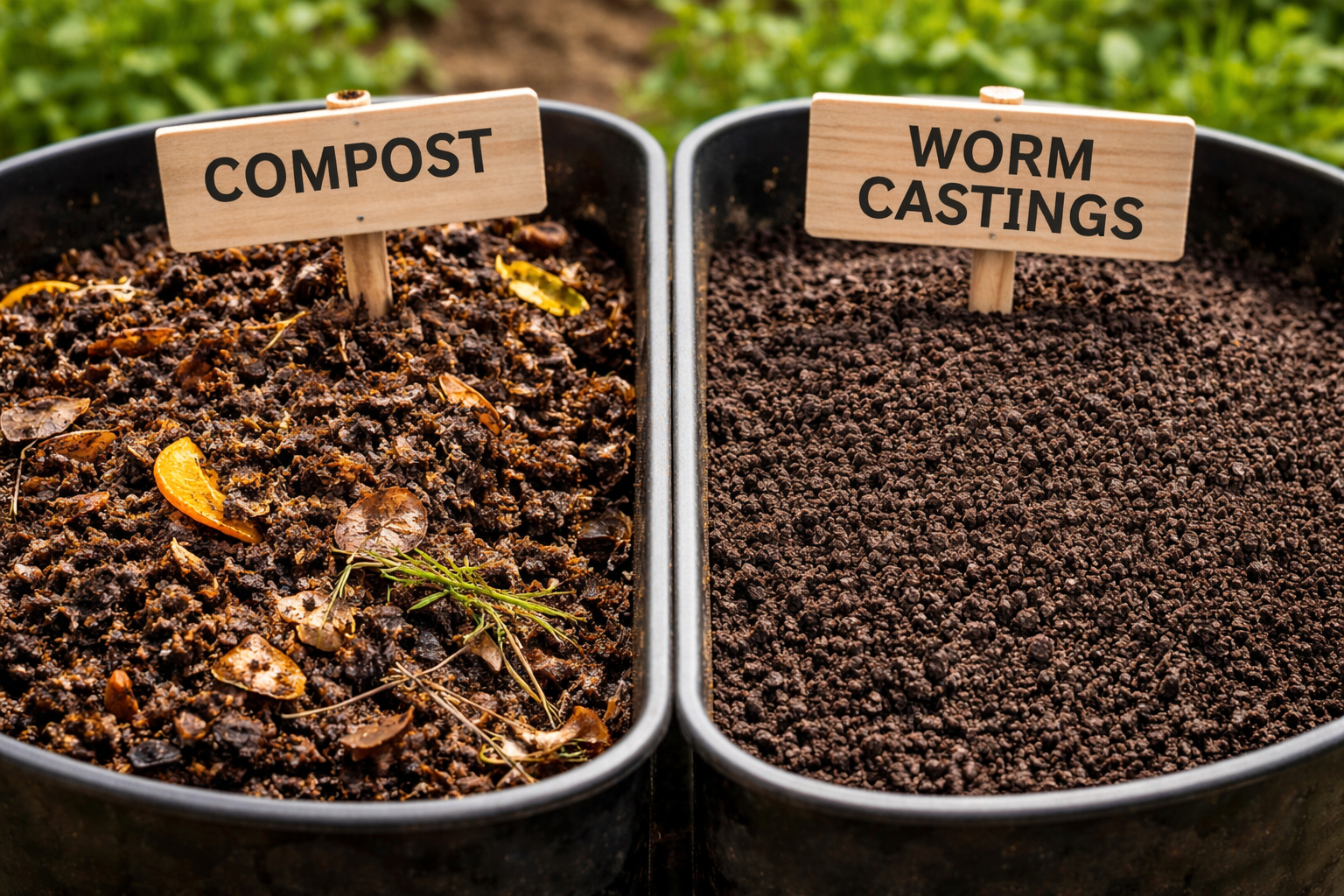
Compost vs worm castings is a common question for gardeners who want healthier plants without chemical feeds. Both improve soil, but they work in slightly different ways. Knowing when to use each will give you stronger growth and better harvests.
What is garden compost?
Compost is decomposed organic matter made from:
- Garden waste
- Kitchen scraps
- Leaves and grass cuttings
It improves soil structure, helps retain moisture and adds slow-release nutrients.
What are worm castings?
Worm castings are the waste produced by composting worms. They are:
- Finer than compost
- Rich in beneficial microbes
- Gentle on plant roots
This makes them ideal for seedlings and potted plants.
Main differences between compost and worm castings
- Nutrient strength: compost = moderate, worm castings = mild but steady
- Texture: compost = chunky, castings = fine
- Microbial life: higher in worm castings
- Smell: castings smell earthy, never rotten
When to use compost
- Preparing garden beds
- Mulching soil
- Improving heavy clay soil
When to use worm castings
- Potting mixes
- Seed trays
- Top-dressing houseplants
Best setup for tomatoes, chillies and peppers
For best results:
- Use compost as your base
- Add 10–20% worm castings
- Top-dress monthly with castings
This gives structure from compost and nutrition from worms.
Can you use too much?
Compost: yes – can cause soggy soil.
Worm castings: very hard to overuse, but don’t replace all your compost with them.
Helpful external resources
Related articles
Final thoughts
Compost vs worm castings isn’t about choosing one – it’s about using both together. Compost builds soil, worm castings supercharge it.
